To start a crochet business, choose the model you want to sell, define the buyer, test one small product line, calculate whether the price pays for your time, and then choose a sales channel that reaches that buyer.
Choose the business model and prove the product economics before you spend weeks on a name, logo, or storefront.
Before selling, verify local business and home-based requirements, sales tax obligations, marketplace rules, and any product-specific safety or labeling rules with the relevant agencies.
The ongoing constraint is production capacity. Finished crochet takes real hours, so a product that sells but pays poorly for those hours is a weak business product.
Last fact-checked: October 5, 2026
This guide is for US beginners considering ready-made crochet items, made-to-order work, commissions, patterns, craft fairs, online marketplaces, or a mixed model. It focuses on product choice, demand, unit economics, sales channels, order terms, quality, workload, and a practical first launch.
1. How a crochet business works
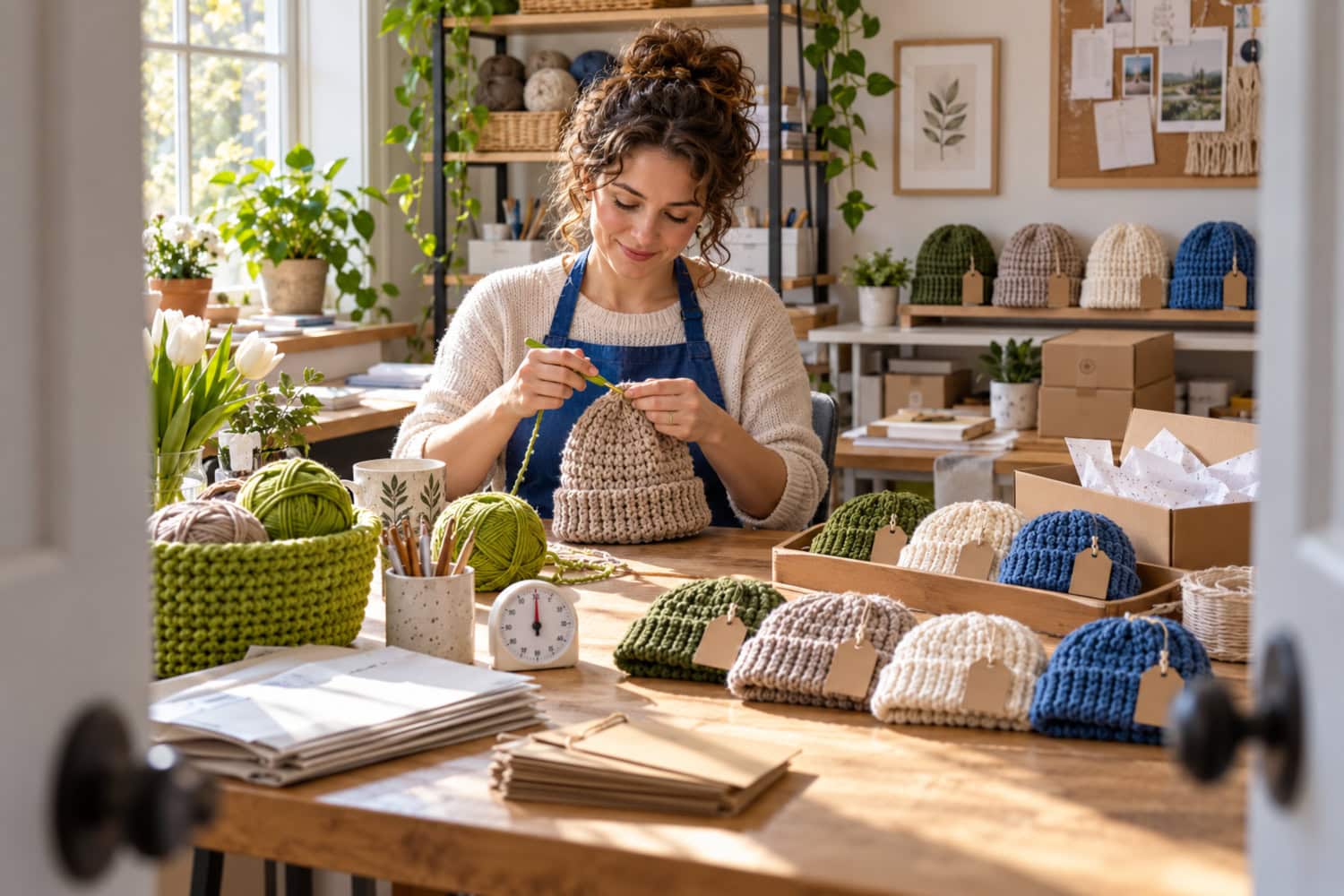
A crochet business turns a manual craft into one of several sellable models: finished goods, custom work, digital patterns, or a mix.
The practical sequence matters because each decision changes the economics of the next one.
| Stage | Decision | Move forward when |
|---|---|---|
| 1. Business model | What you will sell | The model fits your available time and desired scale |
| 2. Buyer and demand | Who buys it and why | Real buyers show interest strong enough to test with money |
| 3. Sales channel | Where those buyers already shop | The channel matches the product, price point, and fulfillment burden |
| 4. Economics | Whether a sale pays for materials and time | A realistic price produces an acceptable return |
| 5. Legal setup | What registrations and rules apply | Required business, tax, home-based, and product rules are checked |
| 6. Order terms | How custom or made-to-order work is controlled | Lead times, dimensions, options, and customer expectations are clear |
| 7. Tools and quality | Whether you can reproduce sale-ready work | The product is durable, consistent, and repeatable |
| 8. Operations | How orders fit into your week | Production, messages, packing, and shipping fit your real capacity |
| 9. Product mix and pricing | What stays on the menu | Each item earns its place by demand and hourly return |
| 10. Review | What to keep, drop, or change | Actual sales and hourly return justify the decision |
| 11. Scaling | What can expand without wrecking capacity | The current model still works at its present volume |
| 12. Traps and myths | Which assumptions to reject | Decisions are based on sales and workload rather than branding or attention |
| 13. Launch | What to do first | You can make, price, sell, and fulfill the first small batch reliably |
The sequence keeps each later decision tied to evidence from the step before it.
2. Choose a crochet business model before you build a store
The central decision is which version of a crochet business fits your time, skills, and tolerance for marketing and deadlines.
Start with the model and its economics, not with branding or a platform account.
| Model | Main advantage | Main constraint | Best fit |
|---|---|---|---|
| Ready-made items | Fast fulfillment from existing stock | Unsold inventory | Makers who can produce a focused small batch |
| Made-to-order items | Lower inventory risk | Lead times and production scheduling | Repeatable designs with controlled options |
| Commissions | Buyer exists before production | Communication, revisions, and deadline pressure | Makers who like custom work and clear client boundaries |
| Digital patterns | One design can sell repeatedly | Writing, testing, editing, support, and discovery | Makers who can teach as well as design |
| Craft-fair inventory | Direct buyer feedback and local sales | Event fit and inventory risk | Products with clear prices and a strong local audience match |
| Mixed model | Several revenue paths | More operational complexity | Sellers who already understand which parts work |
Finished products tie every sale to more production time.
Patterns separate later sales from the hours needed to crochet each physical unit, but pattern work creates a different job: writing instructions, testing, photography, editing, customer clarity, and marketing.
Your hands are the factory, and factories have capacity limits.
A model that looks attractive in revenue terms can still be miserable if every extra sale adds another evening of repetitive work.
3. Find the buyer and test demand
A crochet product becomes more viable when you can name the buyer, the reason for purchase, the realistic price range for that audience, and the place where the buyer already shops.
“People who like crochet” is too broad to make useful product decisions.
Saturation is real enough to matter, but chasing a niche that nobody has ever entered is the wrong target.
A better question is why a specific buyer would choose your item over many similar items.
Use a small test before you make a pile of inventory:
- Pick one buyer situation, such as gifts, practical accessories, a specific aesthetic, or a local event audience.
- Make a small number of products that you can reproduce consistently.
- Show the actual item with the actual intended price, not a vague “Would you buy this?” poll.
- Track inquiries that turn into purchases, not likes, compliments, or follower growth.
- Record how long each piece takes from setup through finishing.
- Repeat only the products that attract buyers and still produce an acceptable return.
A compliment is not a purchase.
The distinction feels rude only until you have spent two weekends making stock that people enthusiastically admire and quietly leave behind.
4. Choose a sales channel that fits the buyer
For a crochet business, the best sales channel already contains your buyer and does not create more operational work than the product can support.
Etsy, craft fairs, social media, and an independent store solve different problems.
| Channel | Strength | Main burden | Use it when |
|---|---|---|---|
| Marketplace such as Etsy | Existing marketplace discovery | Competition, platform rules, listing work | You need access to shoppers you do not already have |
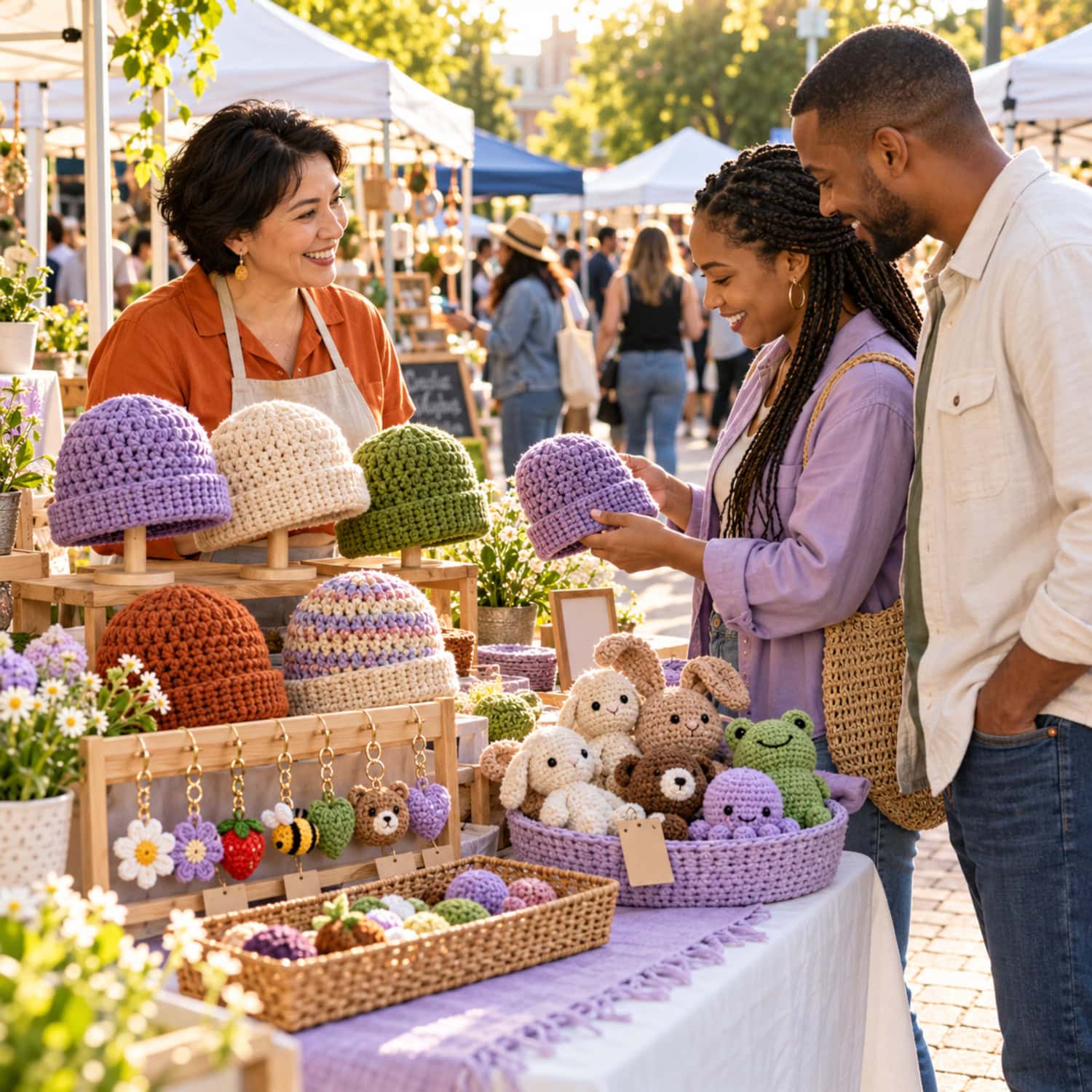
| Craft fairs and local markets | Immediate buyer feedback | Booth preparation, event fit, unsold stock | The event audience matches your products and price points |
| Social media and referrals | Direct relationship with buyers | Ongoing content and audience-building work | You can reach a defined community consistently |
| Independent online store | More control over presentation | You must generate your own traffic | You already have a credible acquisition source |
Craft fairs deserve special caution. One event can be a near sell-out while another produces almost nothing, even with similar work on the table.
Audience, season, price points, product mix, display, payment options, and promotion all affect the result.
Make prices visible.
A shopper standing three feet from your booth may love a piece and still walk away rather than ask the price and discover it is outside the budget.
Friendly acknowledgment helps, but pressure does not.
Online, do not confuse attention with demand.
A seller can have thousands of followers and still discover that those followers do not want the product being offered.
Traffic without buyer fit is just footfall with better branding.
5. Calculate startup costs and unit economics
There is no useful single startup-cost number for every crochet business model.
A pattern shop, a commission-based side business, and a craft-fair inventory business carry different costs, so build the budget from the model you actually chose.
Track at least these cost groups: materials, packaging, selling or event costs, any shipping subsidy, required registrations, and the tools you genuinely need.
For finished goods, labor time is the constraint that usually decides whether the product is worth keeping.
Use this basic operating test:
Effective hourly return = (sales revenue – materials – packaging – selling fees – fixed channel or event costs – shipping subsidy) / total production and fulfillment hours
Here is a worked example using illustrative numbers, not a benchmark.
| Item | Illustrative amount |
|---|---|
| Sales revenue from 10 items | $400 |
| Materials | $100 |
| Packaging | $20 |
| Selling fees | $40 |
| Fixed event or launch cost | $50 |
| Shipping subsidy | $0 |
| Cash left before labor | $190 |
| Production time | 15 hours |
| Fixed event and admin time | 5 hours |
| Total time | 20 hours |
| Effective hourly return | $9.50 per hour |
Now stress-test it at half the expected sales.
Five sales produce $200 of revenue, while materials fall to $50, packaging to $10, and selling fees to $20.
The fixed $50 cost stays, and total time falls to 12.5 hours, producing $70 before labor, or $5.60 per hour.
That is why product economics should be calculated before large-batch production.
A four-hour item can look reasonable until the price required to pay for four hours meets a buyer who sees a small accessory and compares it with mass-produced alternatives.
6. Check business rules and intellectual property before selling
A US crochet seller should verify the business rules that apply to the seller’s location, sales channel, and product type before launch.
Requirements can vary, so use the relevant state revenue or business office and local licensing authority rather than copying another maker’s setup.
At minimum, check whether you need a local business or home-occupation approval, how sales tax applies to your sales, and what the marketplace requires from sellers.
If you make children’s products or another regulated category, check applicable product safety, testing, and labeling rules before offering them for sale.
If the same craft business also sells cosmetics or other skin products, check the separate rules for those products as well.
Intellectual property needs its own caution.
Pattern instructions, pattern photos, finished objects, logos, and recognizable licensed characters are different questions.
Online discussions about what a pattern designer “allows” are often contradictory, so do not treat forum consensus as a legal ruling.
If your product depends on someone else’s brand, character, logo, or other protected material, get qualified legal guidance before selling it.
The same caution applies when the permission language in a purchased pattern is unclear.
Also check whether your venue or business setup requires insurance and price any needed coverage before launch.
7. Set order terms for commissions and made-to-order work
Commissions reduce the risk of making inventory nobody buys, but they replace inventory risk with deadline, communication, customization, and revision risk.
They fit makers who like client work and can control the scope.
For made-to-order listings, state what the item is, the available options, dimensions, production lead time, and care instructions.
For custom commissions, write down the agreed design, price, payment timing, revision boundary, and expected completion window before production begins.
Picture the common failure: the customer asks for a different color, then a different size, then “one small change” after you have already started.
That messaging time has a real cost, and it was missing from the original price.
If your available crochet time is already scarce, custom work can turn a relaxing evening into a queue of obligations.
Keep the option narrow or skip it.
8. Buy tools carefully and use a sale-ready quality gate
A crochet business does not need an impressive equipment list.
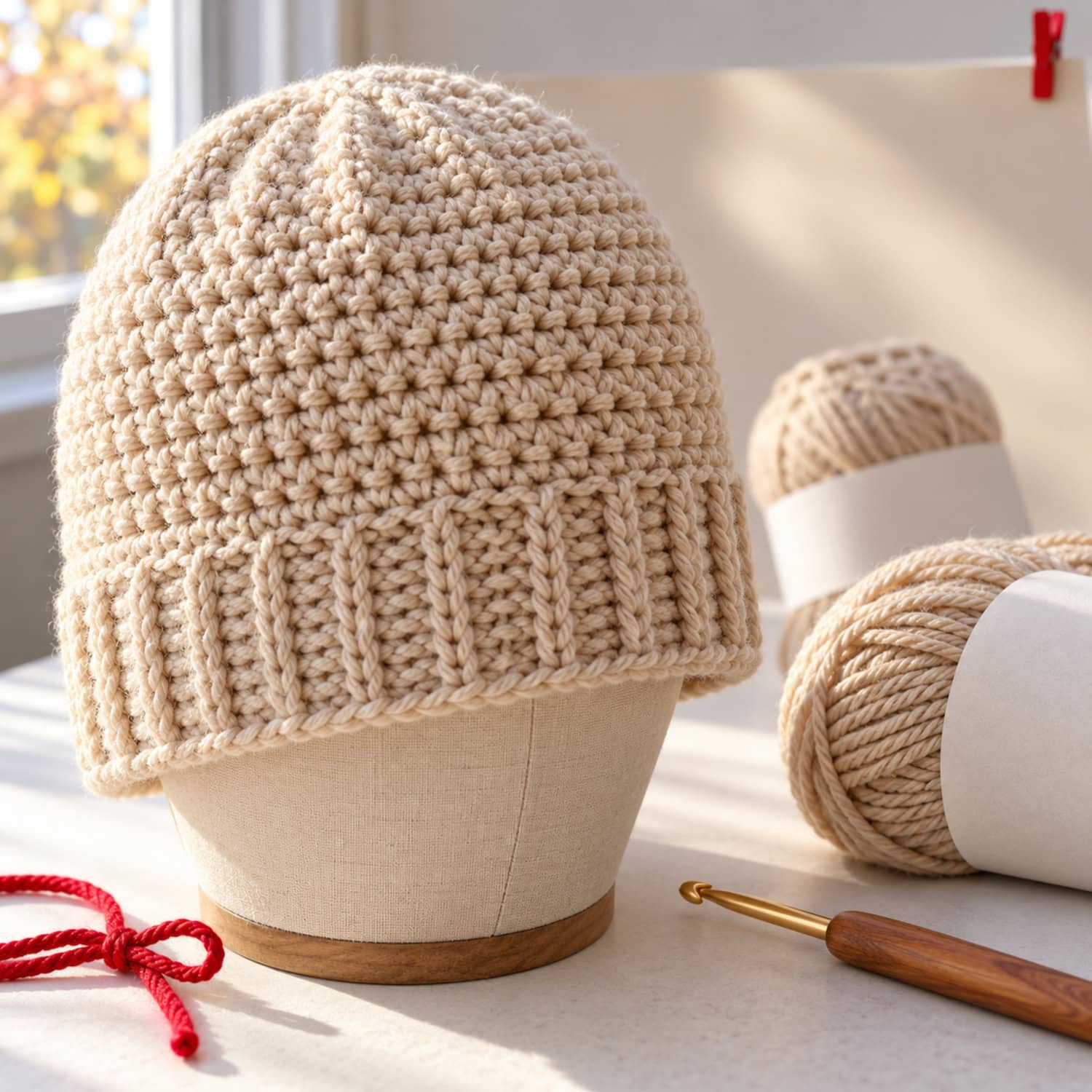
It needs reliable materials, the tools required for the chosen products, and a quality standard you can reproduce every time.
Before you buy inventory or expand a product line, use this checklist:
- Confirm that the yarn and other materials can be sourced consistently enough for repeat orders.
- Time the product from setup through finishing, not just the active crochet portion.
- Check tension, seams, finishing, sizing, and durability for consistency.
- Verify that the finished item can match the photos and description you plan to publish.
- Check whether a substitute material changes feel, size, durability, or production time.
- Avoid buying large material quantities until the product has produced real sales.
Sale-ready quality is less about perfection than repeatability.
A beautiful prototype that cannot be reproduced at the same standard is not yet a dependable business product.
9. Build operations around your real weekly capacity
A crochet business includes production, customer messages, photography, listing work, packing, shipping, market preparation, and promotion.
The business consumes more hours than the stitches alone suggest.
This is where many hobby sellers discover the second job hidden inside the first one.
A weekend that looked like “six hours to crochet” becomes four hours of crochet plus questions, photos, packaging, and a trip to ship orders.
Track total time by product and by channel. For commissions, include pre-sale discussion and revisions.
For fairs, include setup, travel, and selling time.
For patterns, include writing, testing, editing, customer support, and the content needed to help buyers find the pattern.
If every order adds another deadline, growth can become a prettier calendar of obligations.
Treat capacity as a business metric, and set order limits or lead times before the queue becomes the thing you dread opening.
10. Build a product mix and price ladder
A useful crochet product line balances production time, material cost, realistic selling price, repeatability, and audience fit.
“What sells best” has no universal answer because the event, season, audience, and price point change what works.
Small accessories, hats, keychains, plush items, and other quick makes often attract sellers because they reduce labor per unit.
The trade-off is competition: quick products are easy for many makers to produce.
Large garments and blankets can command higher ticket prices, but the hours and materials can push the necessary price far beyond what casual shoppers expect.
Use at least two price points if your channel supports it.
At a fair, that can give the hesitant shopper a lower-cost entry item without forcing you to discount a labor-heavy centerpiece.
Online, it can separate quick repeatable products from premium custom work.
Do not price by copying another seller. Their yarn cost, speed, channel fees, shipping policy, and income goal may be completely different.
Start from your own economics, then test whether your intended buyer accepts the result.
11. Drop weak products and weak channels early
In a crochet business, a product or channel should earn the right to stay.
The most useful measures are actual sales, effective hourly return, sell-through, repeat demand, and the workload required to produce each result.
Drop or redesign a product when the realistic selling price cannot support the time it takes, when buyers repeatedly resist the price, or when quality is difficult to reproduce.
A high-view listing with no purchases is not stronger than a quiet listing that sells.
At craft fairs, separate a bad event from a bad product. If the crowd was wrong for your category or price point, the lesson may be venue selection.
If the right buyers handled the product, liked it, saw a clear price, and still did not buy, the product or offer deserves scrutiny.
Do the same with marketing.
Months of posting that produce attention but almost no orders are a signal to change the audience, offer, channel, or content approach rather than simply posting harder.
12. Scale without multiplying crochet hours forever
Scaling finished crochet is difficult because each additional physical sale usually requires additional manual production.
That does not make the model bad, but it creates a ceiling that should be visible before you chase volume.
You can scale by tightening the product line, improving repeatability, raising prices where demand supports them, limiting custom work, or adding products that do not require a fresh physical unit for every sale.
Patterns are the obvious alternative in the crochet world, but they trade production labor for writing, testing, editing, support, and marketing work.
A mixed model can reduce dependence on one channel or one workload type, but add it only after one part of the business is already understood.
Expanding several weak models at once multiplies operational problems.
The final scaling test is personal as well as financial: can you happily make the winning product 20, 50, or 100 times?
If the answer is no, the business has found a limit worth respecting.
13. Common crochet business traps and myths
Common crochet business mistakes appear before the first serious financial problem.
Sellers often mistake a logo, follower count, or popular product category for evidence that buyers will pay enough.
| Myth | What actually happens |
|---|---|
| “I need a completely unique niche” | You need a clear buyer, use case, or design angle that gives people a reason to choose you |
| “If people compliment it, it will sell” | Praise is weak validation until someone accepts the real price |
| “Etsy will bring customers automatically” | A marketplace offers discovery, but listings still compete for attention |
| “Commissions are safer because there is no inventory” | They reduce unsold-stock risk but add deadline and communication risk |
| “More followers means more sales” | An audience can like your work without wanting the product you sell |
| “I need the perfect name before I launch” | Branding can become procrastination while demand remains untested |
The business-name trap is especially seductive because it feels productive.
You can spend a week comparing names while the harder question, “Will anyone buy this at a price I can live with?”, remains untouched.
14. Launch a crochet business in a small controlled test
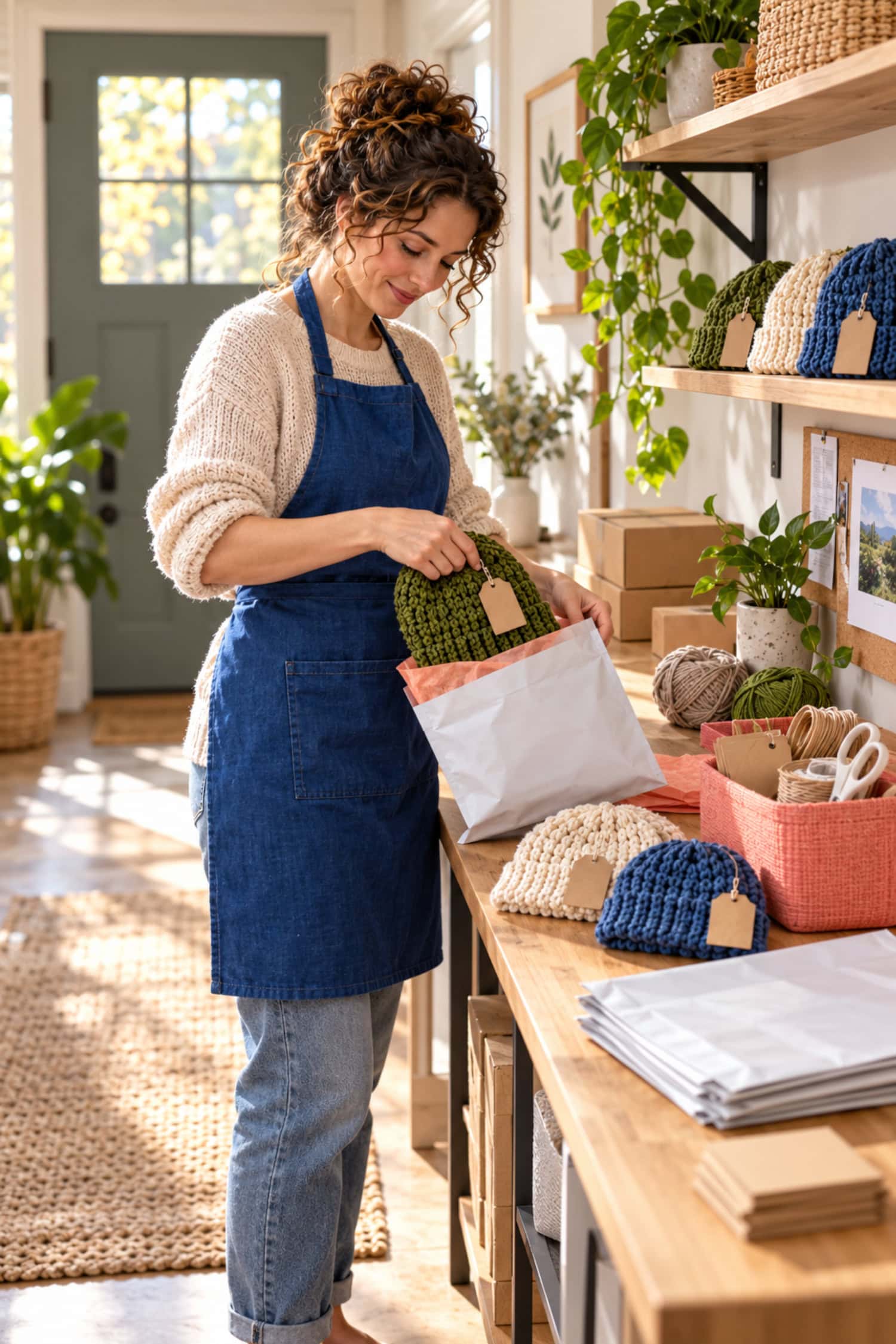
A first crochet business launch should be large enough to produce useful sales information and small enough that a weak result does not leave you with months of stock.
Treat it as an operating test rather than a grand opening ceremony.
- Choose one business model and one clearly defined buyer.
- Select a small product line based on production time, material cost, repeatability, and buyer fit.
- Time every product and calculate the effective hourly return at the intended price.
- Test demand with a small batch, made-to-order offer, commission slot, or pattern launch.
- Choose the sales channel where that buyer is most likely to discover the offer.
- Verify business, tax, home-based, marketplace, product-safety, labeling, and intellectual-property issues that apply.
- Write clear prices, product details, lead times, care information, and custom-order boundaries.
- Prepare only the materials and inventory needed for the test.
- Launch, then record sales, production time, unsold inventory, customer questions, and fulfillment workload.
- After the first selling cycle, keep, change, or drop products based on hourly return and actual demand.
- Expand only after the operation still feels sustainable at the current volume.
This approach also protects the hobby. If selling makes you hate the work, that is useful information, not a moral failure.
A crochet business is optional. The point is to build a business that supports the craft, not one that consumes the reason you liked it.
FAQ
Is a crochet business profitable?
It depends on the product’s realistic selling price, material and channel costs, and total labor time.
Use the effective hourly return test in Section 5 before deciding whether a product is commercially viable.
How much does it cost to start a crochet business?
It depends on the model.
Build your starting budget from actual materials, packaging, tools, selling or event costs, and required setup instead of borrowing a generic number; see Section 5.
Do I need an LLC for a crochet business?
Do not assume an LLC is universally required.
Check your state business and tax requirements and choose a structure that fits your situation; see Section 6.
Can I start a crochet business from home?
Yes, potentially, but home-based business rules and product requirements can vary by location and product type.
Check local home-business rules before selling; see Section 6.
Should I sell finished crochet items or patterns?
Choose finished items if you want to sell craftsmanship directly, and consider patterns if you can write, test, edit, and market instructions.
Compare the workload in Section 2 and the scaling limits in Section 12.
Is Etsy better than craft fairs for crochet?
Neither is universally better.
Etsy offers marketplace discovery while craft fairs offer direct local feedback, so choose based on buyer fit, product price, inventory risk, and workload; see Section 4.
How many products do I need before launching?
There is no useful universal number.
Start with a small line that can test real demand without forcing you to build a large pile of unsold inventory; see Section 14.
Do I need social media to sell crochet?
No single channel is mandatory.
You need a repeatable way for the right buyers to discover the product, which can come from marketplaces, events, referrals, social platforms, or your own audience; see Section 4.
Should I discount crochet products to get sales?
Only if the lower price still leaves an acceptable return after costs and labor time.
A discount can turn a seemingly successful sale into poor hourly economics; see Section 5.
Conclusion
A strong crochet business starts by choosing the right model and proving that the product can pay for your time before branding, inventory, or expansion gets serious.
The rest is disciplined testing: buyer fit, real sales, controlled workload, and a willingness to drop products that look cute but behave badly as businesses.
1. Prove demand with money, not compliments. Test a small product line at the real price before making deep inventory.
2. Measure the return on all your time. Count production, messages, packing, selling, and fulfillment when judging a product.
3. Protect capacity as carefully as margin. Scale only when the winning model still fits the hours and kind of work you actually want.
Further reading
- U.S. Small Business Administration: General federal guidance on planning, launching, and operating a small business.
- Internal Revenue Service: Federal tax information for businesses and self-employed individuals.
- U.S. Consumer Product Safety Commission: Product safety information that matters when a handmade item falls into a regulated consumer-product category.
- U.S. Patent and Trademark Office: Official information on trademarks and other intellectual-property topics.
- How to Start a Crochet Business: A broad overview of business models, product choices, pricing, channels, branding, and store setup.
- Starting a Crochet Business: Selecting Your Products: Practical discussion of product selection and offering multiple price points.
- Pricing for Crocheting: Community discussion of labor time, materials, and the difficulty of pricing handmade work.
- Craft Fair Pricing Psychology: Seller discussion of visible prices and buyer behavior at in-person events.