To start a film production company, first decide who will pay the company and whether you are selling production services, developing owned films and intellectual property, or running a hybrid.
Then validate demand, build proof for that buyer, model pricing and cash flow, set up the legal and insurance structure, and only then commit to fixed overhead.
Start with the buyer and revenue model before the company paperwork. Registration, taxes, insurance, and licensing depend on your jurisdiction and the work you perform.
Verify the requirements with the relevant business, tax, labor, and licensing agencies. The harder ongoing job is keeping clients or financing moving while productions consume your time and cash.

Last fact-checked: October 5, 2026
This guide is for US founders starting a commercial, corporate, production-services, independent film, or hybrid production company. It covers demand, clients, economics, business setup, and contracts. It also covers equipment, crews, original-film financing, distribution planning, and scaling without assuming every founder needs major fixed overhead.
1. How a film production company works
A film production company organizes the business, people, rights, money, and production systems required to deliver client work or develop and exploit original films.
Start with the buyer and revenue model before the company paperwork, because the company structure should support a business that already has a plausible way to get paid.
A client-services company sells production capacity to paying clients.
An original-film company develops projects that need financing, rights, market access, and eventual distribution or licensing.
A hybrid does both, but the two sides need separate cash and operating logic.
The launch sequence should follow the dependencies below.
| Stage | Decision | Move forward when |
|---|---|---|
| 1. Define the company model | Services, original films, production services, or hybrid | You can name who pays and how money reaches the company |
| 2. Validate demand | Which buyer has a recurring problem you can credibly solve | You have real conversations, inquiries, referrals, or project opportunities that support the offer |
| 3. Build proof and acquisition | What proof and sales channel create the next opportunity | Your reel, outreach, and referral network point at the same buyer |
| 4. Model the economics | What a project must earn and how much cash is needed before payment | Pricing covers project costs, overhead, contingency, and profit |
| 5. Build the film market path | Financing, packaging, rights, sales, and distribution | The project is developed for a plausible market |
| 6. Set up the business | Entity, tax setup, banking, insurance, and required licenses | The company can contract, receive money, pay people, and carry required coverage |
| 7. Set contract and rights terms | Scope, payment, revisions, ownership, usage, releases, and delivery | Duties, payment timing, and rights are clear |
| 8. Choose equipment and crew | What to own, rent, freelance, or hire | Utilization justifies fixed commitments and the project can be staffed reliably |
| 9. Build operations and cash controls | Scheduling, payroll, vendors, bookkeeping, procurement, and collections | A profitable project will not create a cash crisis |
| 10. Control project selection | Which jobs to accept, reject, or reshape | Scope, payment, rights, schedule, and strategic value fit the company |
| 11. Scale deliberately | Freelancer, employee, partner, or no change | Workload and revenue justify more fixed responsibility |
| 12. Avoid structural traps | Overhead, gear, premature hiring, weak partnerships, and vanity setup | Each commitment solves a real bottleneck instead of signaling legitimacy |
| 13. Launch and review | What must happen before spending, signing, shooting, and scaling | Early projects produce cash and useful operating evidence |
A production company becomes useful when it solves coordination problems that freelance work no longer handles cleanly.
A logo cannot solve a missing buyer.
2. Choose the production company model
The business model determines the buyer, sales process, cash cycle, risk, and reason the company exists.
Film production companies that look similar from the outside can run on completely different economics.
| Model | Primary buyer or money source | How the company gets paid | Main risk | Best fit |
|---|---|---|---|---|
| Commercial and branded production | Brand or agency | Project fees and production fees | Inconsistent client pipeline | Founders with commercial samples, agency relationships, or a clear industry market |
| Corporate video | Company or nonprofit | Project fees or retainers | Price pressure and weak differentiation | Founders who can solve recurring communication or marketing needs |
| Production services | Other producers and production companies | Service fees and day-based production charges | Low utilization between projects | Founders with local crew, logistics, production management, or specialist capability |
| Independent narrative or documentary | Investors, partners, distributors, licensees, or audience | Financing supports production, while rights, licensing, sales, and distribution drive monetization | Long time to cash and financing uncertainty | Producers building original intellectual property and a market-facing package |
| Hybrid | Clients plus original-film partners or financiers | Service revenue plus original-project rights and financing structures | Focus drift and cash being pulled from one side into the other | Founders who deliberately use client work to support a separate development slate |
For a first-time founder, choose the model that matches the proof, relationships, skills, and access you already have rather than the one that sounds most prestigious.
A cinematographer with agency relationships can test a service offer sooner than a writer-producer with limited commercial access.
The second founder needs stronger packaging, producing credibility, financing access, and a route to market.
A hybrid can work, but track service work and original-film development with separate budgets, pipelines, and review rules so client revenue does not become an unlimited development subsidy.

3. Validate demand and choose a market
A film production company should validate a reachable buyer before adding fixed overhead.
Demand is stronger when the buyer has recurring need, enough budget, accessible decision-makers, and a problem your existing work can credibly solve.
A starting niche can change as the company gains proof and demand.
Practitioners disagree on how narrow a production company should be, and both focused specialists and multi-industry generalists can work.
The practical test is whether a buyer can quickly understand why your company belongs on the shortlist.
Use these variables to choose a starting market:
- Existing proof that resembles the work the buyer needs.
- Buyer budgets that can support proper pre-production, production, and post-production.
- Recurring demand rather than a one-off vanity project.
- Access to decision-makers through referrals, agencies, communities, or direct outreach.
- A market deep enough to support more than one client.
Suppose your reel is mostly polished music performance work, but you pitch industrial manufacturers with no examples of interviews, facilities, products, or corporate storytelling.
The reel can be excellent and still fail to show how your past work reduces the buyer’s risk.
Before spending on an office or staff, talk to prospective buyers and referral partners.
Ask what they commission, how they choose production companies, what creates risk for them, how often they buy, and what makes a vendor easy to rehire.
Use those questions in real buyer conversations instead of answering them yourself.
4. Build proof and a client acquisition system
A film production company needs both credible proof and a repeatable way to create the next conversation. A reel is proof, not a sales pipeline.
Service-side acquisition can come from referrals, agency relationships, direct outreach, or partnerships.
Inbound search and networking can support the mix. Choose channels you can keep running while active productions consume your attention.
Build the portfolio around the work you want to sell. A general reel can show craft, but category-specific proof reduces buyer uncertainty.
Case material is stronger when it shows the business problem, the production challenge, and what you actually delivered rather than only a montage of attractive frames.
A common failure is easy to picture.
The founder spends two weeks producing and editing, stops outreach, delivers the job, and finds the next month empty.
Keep sales activity running during production periods.
For client services, create a small weekly acquisition routine that survives busy production periods, such as referral follow-ups, targeted outreach, agency check-ins, and portfolio updates.
Original-film companies face a different credibility problem.
A financier, talent representative, sales agent, or distributor is evaluating more than the script.
The package can show track record, attachments, audience access, and genre fit.
It can also show execution credibility, clean rights, budget discipline, and a believable path to market.
5. Model startup costs and project economics
There is no single useful startup-cost figure for a film production company because the model, gear strategy, staffing, and premises change the cost.
Insurance, project scale, and working capital change it further.
A lean service company using rentals and project crews carries far less fixed overhead than one with employees, space, and owned equipment.
Start by separating fixed commitments from project-specific spending.
| Cost area | Usually fixed or variable | Decision to make |
|---|---|---|
| Business formation and administration | Mostly fixed or periodic | What structure and filings are actually required |
| Insurance | Fixed or project-specific | What coverage clients, locations, payroll, and distributors require |
| Office or studio | Fixed | Whether a dedicated space creates enough operational value to justify overhead |
| Core equipment | Fixed after purchase | Whether utilization justifies ownership |
| Specialized equipment | Variable when rented | Whether the project should carry the rental cost |
| Freelance crew | Variable | Which roles should scale with production volume |
| Employees | Fixed or semi-fixed | Whether workload is predictable enough to support payroll |
| Post-production | Fixed, variable, or mixed | What should be internal, freelance, or vendor-based |
| Travel and locations | Variable | Whether the client or project budget covers them clearly |
| Working capital | Cash reserve rather than expense | How much cash is needed before receivables arrive |
For service work, price the full project and the business burden around it.
Project price = direct project cost + overhead allocation + contingency + target profit
Direct project cost can include pre-production labor, crew, rentals, and travel.
Post-production, licensing, and project-specific insurance belong there when relevant.
Keep those costs in the estimate instead of pricing only the shoot.
The following numbers are illustrative, not a market benchmark.
| Illustrative project term | Amount |
|---|---|
| Direct project cost | $6,000 |
| Overhead allocation | $1,500 |
| Contingency | $500 |
| Target profit | $2,000 |
| Project price | $10,000 |
Now stress-test the month. Assume the company expects two such projects, with $5,000 of fixed monthly overhead outside direct project costs.
| Illustrative monthly case | Expected sales | Half expected sales |
|---|---|---|
| Revenue | $20,000 | $10,000 |
| Direct project cost | $12,000 | $6,000 |
| Fixed overhead | $5,000 | $5,000 |
| Operating result before tax | $3,000 | -$1,000 |
The numbers are illustrative. What matters is their behavior: variable project costs fall with sales, while fixed commitments keep arriving.
Working capital is the second calculation founders often miss. List project cash that leaves before client payment, add fixed costs due in the same window, and subtract cash collected in advance.
If the company must pay crew, rentals, and vendors before a client pays on net 30 or net 60 terms, a profitable job can still create a cash emergency.
Profit can survive on paper while cash dies in the bank.
For an original film, do not use the service-company formula as a profitability forecast.
Build the budget and financing plan around financing structure, rights, distribution, licensing, and the actual market path.
6. Build the financing and distribution path for original films
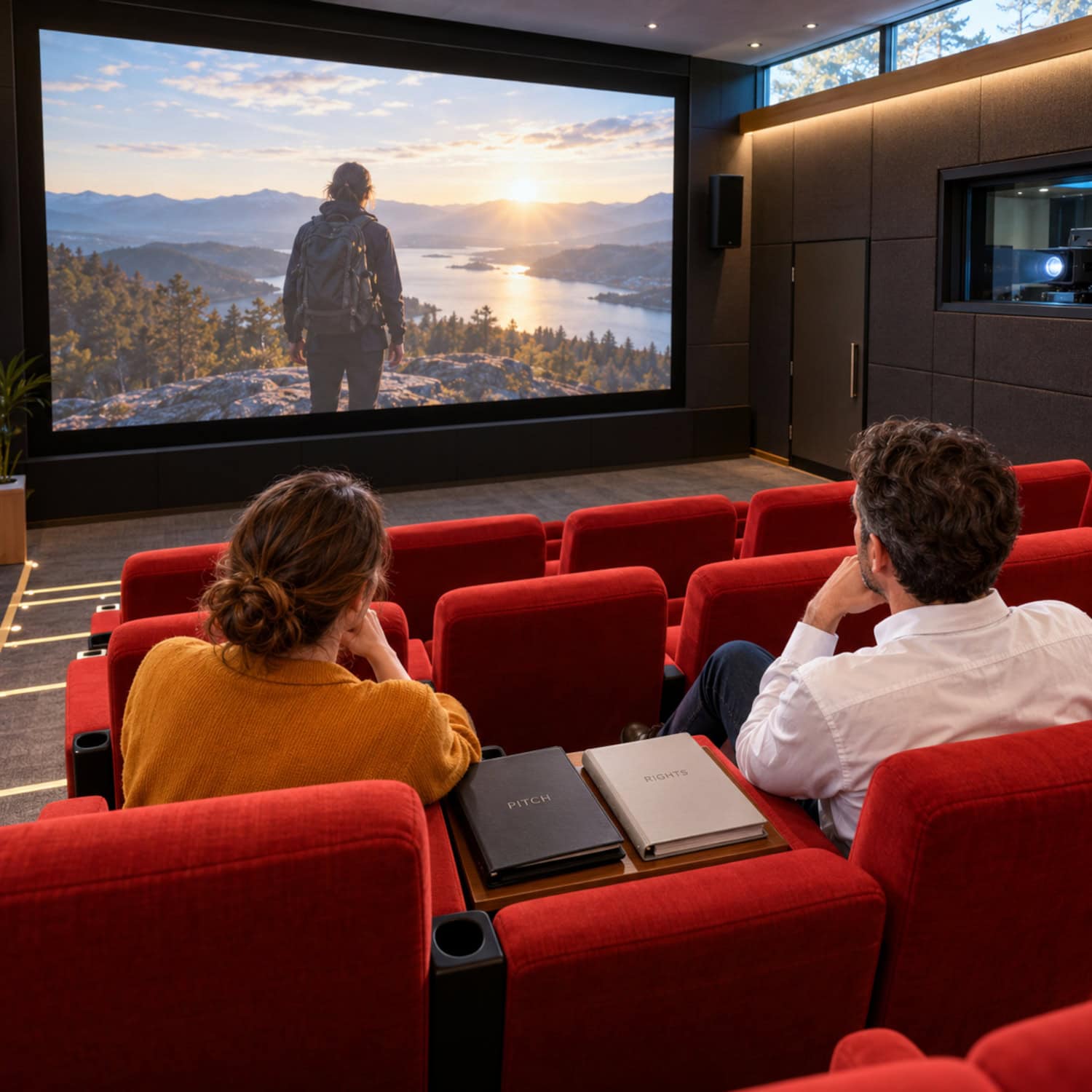
An original-film production company needs a financing and market strategy before the film is treated as a finished product waiting for rescue.
Investors, studios, sales agents, distributors, and audiences are different counterparties, and each evaluates a different kind of risk.
Financing depends on more than script quality. A stronger package reduces uncertainty around execution, budget, and audience.
Attachments, rights, and route to market also matter.
Keep the film budget and financing plan separate. The budget says what the project costs.
The financing plan identifies potential capital sources, their expectations, the related rights or economics, and the fallback if part of the plan fails.
Distribution should influence development earlier than the final export. Genre fit, audience, territories, and rights affect market conversations.
Clearances, errors and omissions insurance, pitch materials, talent, and project stage can matter as well.
A finished film with unclear rights or no plausible buyer is not automatically more valuable because more money has already been spent on it.
Sunk effort is emotionally persuasive and commercially indifferent.
For a hybrid company, set a budget and review point for original development.
This prevents service-company cash and staff time from drifting into a slate without a stopping rule.


7. Set up the business and insurance
A film production company needs a legal and administrative structure that can sign contracts, receive revenue or financing, pay people, hold rights, and carry the required insurance.
The right entity and filings depend on jurisdiction, ownership, tax treatment, and project risk.
A limited liability company (LLC) is one option, not a universal federal requirement.
Sole proprietorships, partnerships, LLCs, and corporations create different legal and tax consequences.
Check formation and ongoing filing requirements with your state business agency, and confirm tax registration and employer obligations with the relevant tax authorities.
Obtain the tax identification and banking setup required for the structure you choose, then separate company and personal money.
Partners should document ownership, authority, and contributions.
They should also define asset ownership, deadlock procedures, and exits before a dispute occurs.
Narrative producers sometimes use a company-level entity plus a separate project entity for an individual film.
Whether that makes sense depends on liability isolation, investors, and contracts. Accounting, ownership, and jurisdiction also matter.
Use an entertainment or business attorney and a certified public accountant (CPA) when investor money, shared ownership, intellectual property, or project-specific entities are involved.
Insurance depends on the work.
Workers’ compensation and errors and omissions insurance are recurring concerns, while clients or distributors may require other coverage.
Confirm the policies with a licensed insurance professional and relevant counterparties.
Creative and media work also creates activity-specific compliance questions:
- Copyright and licensing affect who can use footage, music, artwork, scripts, and other protected material.
- Client contracts should state scope, payment, delivery, and revision terms. They should also define ownership and usage.
- Model and property release requirements depend on the project and intended use. Verify them before production.
- Music licensing may be required for music used in a production. Confirm the needed rights before use.
- Talent-agency licensing may apply to some talent representation or procurement activities. Check with the relevant state labor or licensing agency.
- Commercial drone work can trigger Federal Aviation Administration requirements under Part 107. Check current FAA rules before operating drones for production.
Local business licenses, permits, payroll rules, and other requirements vary.
Verify them with the agencies that govern where the company operates and where the production occurs.


8. Put contracts and rights in writing
A film production company should define scope, payment, rights, approvals, and delivery before production begins.
Verbal alignment is fragile once the schedule changes, the edit grows, or the client assumes that paying for production means owning every possible right forever.
For service work, the contract should address scope, schedule, payment, revisions, and cancellation.
Add clear terms for expenses, ownership, usage rights, raw footage, and delivery. Keep delivery milestones aligned with the agreed payment schedule.
The same discipline matters with crew and vendors.
Deal memos, contractor agreements, payroll documentation, and location agreements become part of the production system.
Keep releases and licensing records with them so rights can be reconstructed later.
For original films, clear rights are part of market access. Music, footage, artwork, locations, and talent agreements need proper handling.
Chain-of-title records and other required releases can affect whether a distributor, sales agent, insurer, or financier is comfortable with the project.
Picture the bad version.
The film is finished, a sales conversation finally becomes serious, and someone asks for documentation that was treated as a post-production problem.
The creative work is done, but the business side is suddenly blocking the sale.
9. Choose equipment and crew
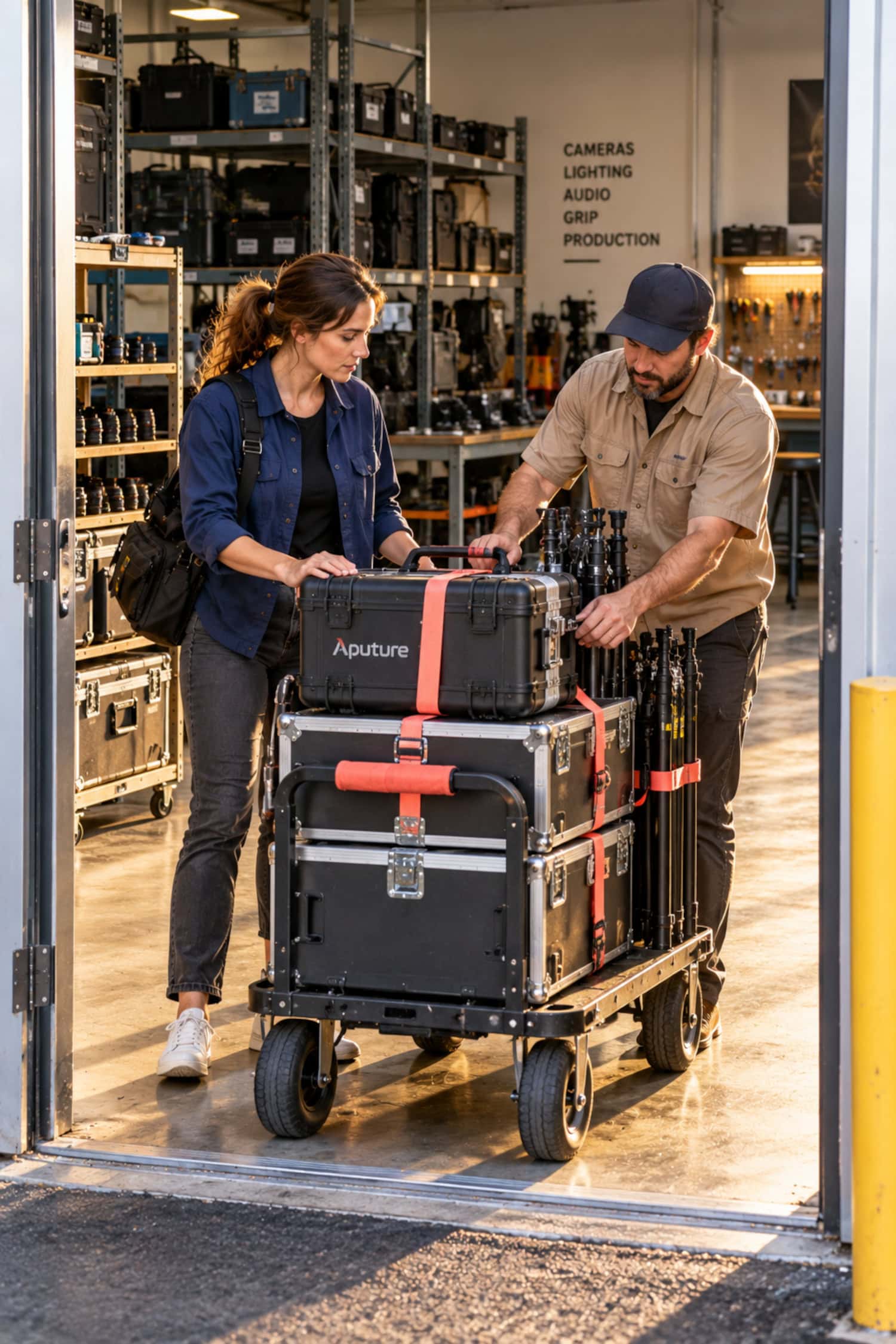
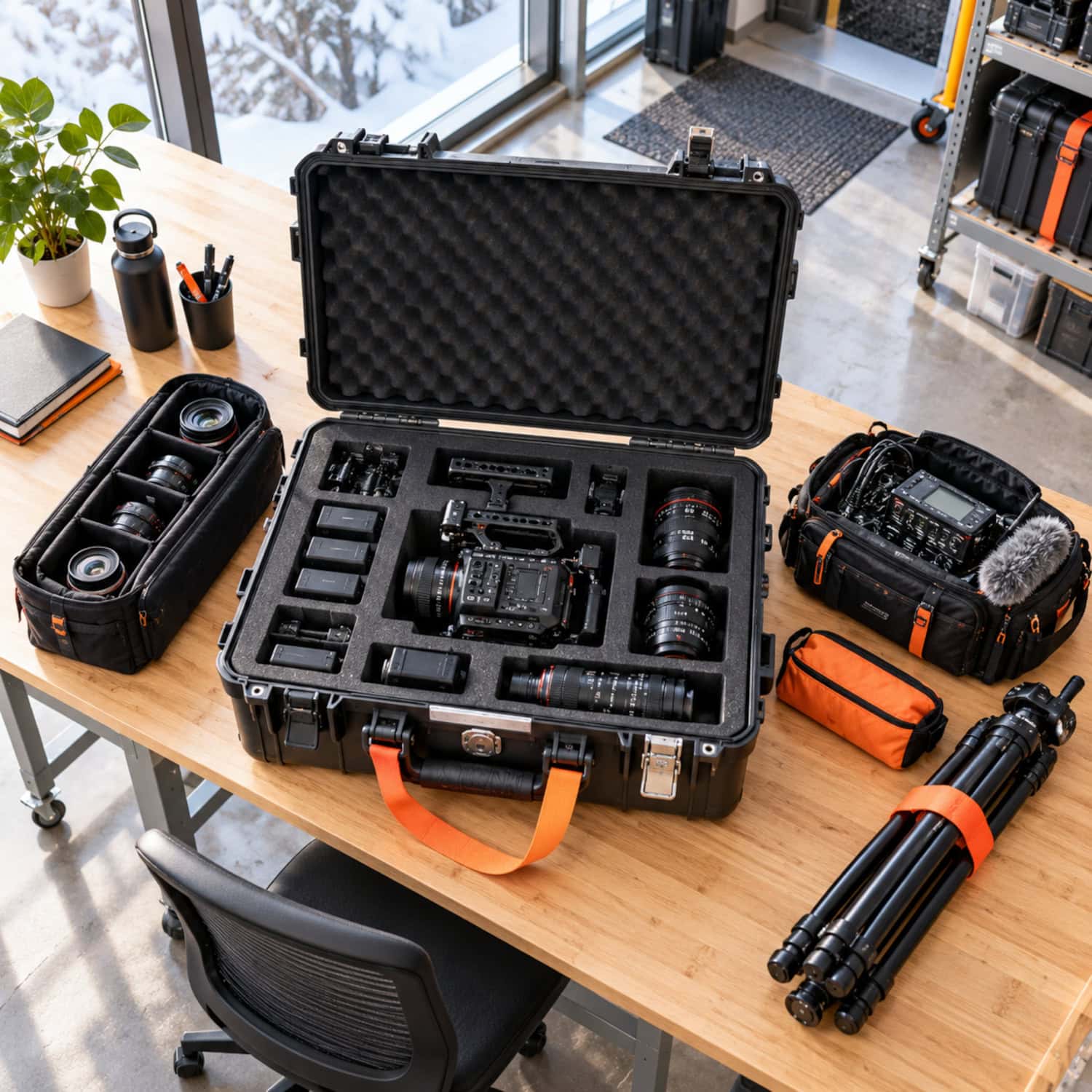
A film production company should own equipment that earns its keep and rent equipment that is specialized, infrequently used, or better matched to a specific job.
The same logic applies to people: keep fixed commitments low until workload becomes predictable.
Idle gear is expensive furniture.
A camera, lens set, lighting package, or audio kit can be valuable when repeated use, billable kit charges, or operational savings justify ownership.
Gear that spends most of the year in a case ties up cash without solving a recurring need.
Use this pre-purchase checklist before buying major equipment:
- List how often the equipment would have been used on recent or already-booked projects.
- Compare the ownership cost with realistic rental cost for that usage.
- Check whether clients or agencies regularly require a different package.
- Include maintenance, repair, storage, transport, and insurance in the ownership decision.
- Decide whether the equipment can be billed as a kit or otherwise contribute revenue.
- Confirm that reliable rental alternatives exist when your owned kit is not suitable.
- Avoid buying specialized equipment merely because one upcoming project needs it.
- Recheck the decision after several projects instead of treating the first estimate as permanent.
Staffing should follow the same discipline.
Project-based freelancers let the company match labor to booked work, while employees make sense when the bottleneck is recurring and the workload is predictable enough to support fixed payroll.
Hiring an editor after one overloaded month can turn a temporary bottleneck into a permanent obligation.
Repeated lost time, deadlines, or sales because editing is always full may signal a real role.
10. Run production and protect cash flow
A film production company remains an operating business between shoots. The creative team on set is only one part of it.
Scheduling, budgeting, payroll, procurement, and bookkeeping matter every week.
Insurance, vendor management, collections, and record-keeping decide whether completed work becomes usable profit.
The cash-flow problem deserves its own operating rule.
A client can approve a large project, the company can execute it profitably, and the bank balance can still become dangerous if crew and vendors need payment long before the client’s net 60 invoice clears.
Before each project, map when cash enters and leaves.
Use deposits or milestone payments where the agreement supports them, identify costs that must be fronted, and keep a reserve matched to the payment cycle.
Operational discipline also protects sales capacity.
If the founder is directing, producing, editing, chasing invoices, and booking crew, business development often disappears first.
Delegate the recurring bottleneck rather than copying a generic org chart.
Set a post-project review for estimate versus actual cost, scope changes, revision volume, and collection time.
Also review crew performance, client quality, and repeat potential so the next bid improves.
11. Control project selection
A film production company should reject or reshape projects that create more risk than value for the company.
Revenue is useful only when the scope, payment, rights, schedule, and delivery burden are compatible with the business.
Use this acceptance checklist before saying yes:
- Confirm that the budget can support the actual pre-production, production, and post-production workload.
- Define scope clearly enough to estimate crew, equipment, locations, travel, and revisions.
- Check the schedule for realistic preparation, shooting, post-production, and approval time.
- Review payment terms and identify how much cash the company must front.
- Identify copyright, licensing, release, insurance, or other rights exposure before production.
- Decide whether the project strengthens the portfolio or relationships you want more of.
- Estimate the likelihood of repeat work or a useful referral relationship.
- Walk away or renegotiate when the risk cannot be priced or controlled sensibly.
Change direction when the same problem repeats. A niche with inquiries but weak budgets may be the wrong market.
Slow-paying clients may require new terms, while repeated post-production overruns require a different scope or price.
One bad project does not justify a full repositioning.
Recurring losses across similar projects do justify changing the offer, price, terms, or target market.
12. Scale the film production company
A film production company should scale when a recurring bottleneck limits profitable work and the company has enough predictable demand to support the next commitment.
Growth often changes the founder’s job from hands-on filmmaking toward sales, producing, client management, and operations.
That transition surprises people.
The founder can spend Monday on estimates, Tuesday on client calls, Wednesday fixing payroll, Thursday staffing a shoot, and Friday trying to restart sales.
Use freelancers when demand is irregular or specialized.
Consider employees when the same role is continuously needed and the company can carry the fixed cost through slower periods.
The first hire should remove a recurring bottleneck.
Partnerships require an even harder test.
A partner can bring clients, capital, producing skill, operations, or complementary creative ability, but shared ownership also creates governance and exit risk.
Before creating a partnership, answer these questions in writing:
- What does each partner contribute in cash, labor, equipment, intellectual property, or business relationships?
- Who owns equipment or intellectual property that existed before the partnership?
- Who has authority over sales, creative decisions, hiring, spending, and contracts?
- How are profits, salaries, reimbursements, and new capital handled?
- What happens if the partners disagree on a major decision?
- What happens if one partner wants to leave, stops contributing, or wants to sell an interest?
- How are client relationships and unfinished projects handled if the partnership ends?
A 50/50 split can create deadlock, so the agreement should state how major disagreements are resolved and what happens if the owners cannot continue together.
13. Avoid the common traps
The most expensive mistakes in a film production company usually come from committing to structure before the business has earned the commitment.
Offices, employees, equipment, and partnerships can be useful, but they should solve proven problems.
| Myth | What actually happens |
|---|---|
| Forming an LLC means the production company is established | Formation handles one administrative layer. Demand, pricing, cash flow, contracts, and delivery still determine whether the business works |
| I need to own professional gear before serious clients will hire me | Rental is normal for specialized or infrequently used equipment, and ownership makes sense when utilization supports it |
| I must choose one tiny niche immediately | Focus helps buyers understand the offer, but practitioners disagree on how narrow the niche must be. Use buyer clarity and proof as the test |
| A strong film should attract investors on its own | Financing also depends on execution credibility, market, audience, attachments, budget, rights, and the package around the film |
| Distribution can wait until the film is finished | Rights, clearances, insurance, market fit, materials, and sales strategy can matter before final delivery |
| Hiring employees proves the company is growing | Fixed payroll can reduce flexibility when project volume is inconsistent. Hire when predictable workload supports the role |
| A partner solves the fact that I cannot do everything | A partner adds capability and also creates ownership, authority, deadlock, asset, and exit questions that need explicit answers |
Turnkey offers deserve the same skepticism.
A bundle of gear, branding, leads, office space, or business setup is useful only when the underlying buyer, economics, and operating system make sense.
14. Launch plan for the first 90 days
A film production company should launch in stages that preserve cash before fixed commitments grow.
The first 90 days should prove the offer, tighten operations, and show what deserves more investment.
- Choose the model and write one sentence naming the buyer, the offer, and how the company gets paid.
- Interview prospective buyers, referral partners, or film-market counterparties and test whether the problem is real and reachable.
- Build or reorganize portfolio material so it supports the buyer you are targeting.
- Set a repeatable acquisition routine that can continue during active productions.
- Build conservative project economics and a cash-flow stress test before quoting work or committing to overhead.
- For original films, develop the financing, rights, packaging, and distribution path alongside creative development.
- Choose the business structure, complete required registrations, separate business banking, and arrange the insurance needed for the work.
- Create standard contract, payment, rights, release, and production-document workflows with professional review where needed.
- Rent or freelance the first version of anything you do not yet use predictably enough to own or employ full time.
- Run the first projects with job-cost tracking, clear change control, and documented collection milestones.
- Review which clients, projects, services, and channels produced acceptable economics and repeat potential.
- Add equipment, employees, premises, or partners only when the evidence from actual work supports the commitment.
- Reject turnkey packages or fixed overhead that do not solve a proven bottleneck, then review who pays, what the company can deliver repeatedly, and which bottleneck should be solved next.
FAQ
Do I need an LLC for a film production company?
No, an LLC is not a universal requirement for a film production company.
Structure depends on ownership, taxes, jurisdiction, contracts, and risk, so see Section 7.
How much does it cost to start a film production company?
It depends on the operating model.
Gear and staffing choices, fixed overhead, insurance, project scale, and working capital affect the cost, so use Section 5 to model it.
Can I start a film production company with little money?
Yes, you can reduce upfront commitments by renting specialized gear and using project-based freelancers.
Sections 5 and 9 explain the remaining cash requirements.
How do film production companies make money?
It depends on the model.
Service companies earn project or retainer fees, while original-film companies use financing to produce projects and monetize rights through licensing or distribution.
See Sections 2 and 6.
Is a film production company profitable?
It depends on pricing, utilization, overhead, project costs, and collection discipline. See Section 5 for economics and Section 10 for cash flow.
How long does it take to start a film production company?
It depends on the operating model and jurisdiction.
Service work can begin once setup and a paid project are ready, while original-film development may continue through financing and packaging before production, so see Sections 6 to 10 and 14.
Can the same company make commercials and original films?
Yes, a hybrid can do both, but the service business and original-film slate should have separate budgets, pipelines, and review rules.
See Section 2 for the model and Section 6 for the film side.
When should I approach sales agents or distributors?
It depends on project readiness.
Approaching relevant sales agents or distributors before final delivery can make sense once rights, clearances, fit, and materials are in order, so see Section 6.
Conclusion
The durable rule is to define the buyer and revenue model before building the organization around them.
A film production company becomes easier to structure when you know what work or rights create value, how money moves through each project, and which risks must be controlled before production begins.
1. Prove a buyer, offer, and route to the next project before adding fixed overhead.
2. Price every project for direct costs, overhead, cash timing, contingency, and profit rather than shoot time alone.
3. Put business structure, contracts, rights, insurance, and payment mechanics in order before the production creates obligations.
Further reading
- U.S. Small Business Administration: General US resources on planning, launching, and managing a small business.
- Internal Revenue Service: Federal tax information for business entities, employers, and self-employed operators.
- U.S. Patent and Trademark Office: Official information on trademarks and other federal intellectual property matters.
- Federal Aviation Administration: Official aviation rules and guidance, including commercial drone operations.
- Film Independent on starting a production company: A producer-focused discussion of company purpose, umbrella structures, and single-picture entities.
- StudioBinder on starting a production company: A broad startup walkthrough covering market research, positioning, planning, team, and company setup.
- Wrapbook on starting a production company: Practical production-business guidance on deciding whether to form a company, choosing a niche, and building operations.
- Stage 32 producing discussions: Community discussions about producing, financing, project management, and building the systems behind a film.