To start a ghost kitchen business, identify customers within a workable delivery area, choose food that travels well, compare commercial kitchen options, and model the money left from each order.
Next, set up the business, obtain the required food-service approvals, agree on kitchen and delivery terms, and test a small menu before opening fully.
Prove demand and per-order profit before committing to expensive kitchen space. The price of entry depends on whether you already have an approved kitchen, rent shared space, or build a dedicated facility.
Kitchen deposits, equipment, staffing, packaging, platform fees, and cash reserves all matter. Your local health department is the main food-service permission gate, with zoning and fire requirements also affecting the site.
Orders alone will not pay the bills if fulfillment costs consume the sale.
Last fact-checked: October 11, 2026
This guide is for US founders planning a delivery-focused food business, including restaurant owners considering an additional virtual brand. It covers kitchen formats, local demand, startup costs, permits, contracts, operations, and a cautious first launch. The emphasis is on prepared meals from an approved food-service facility, not packaged food manufacturing or alcohol sales.
1. How a ghost kitchen business works
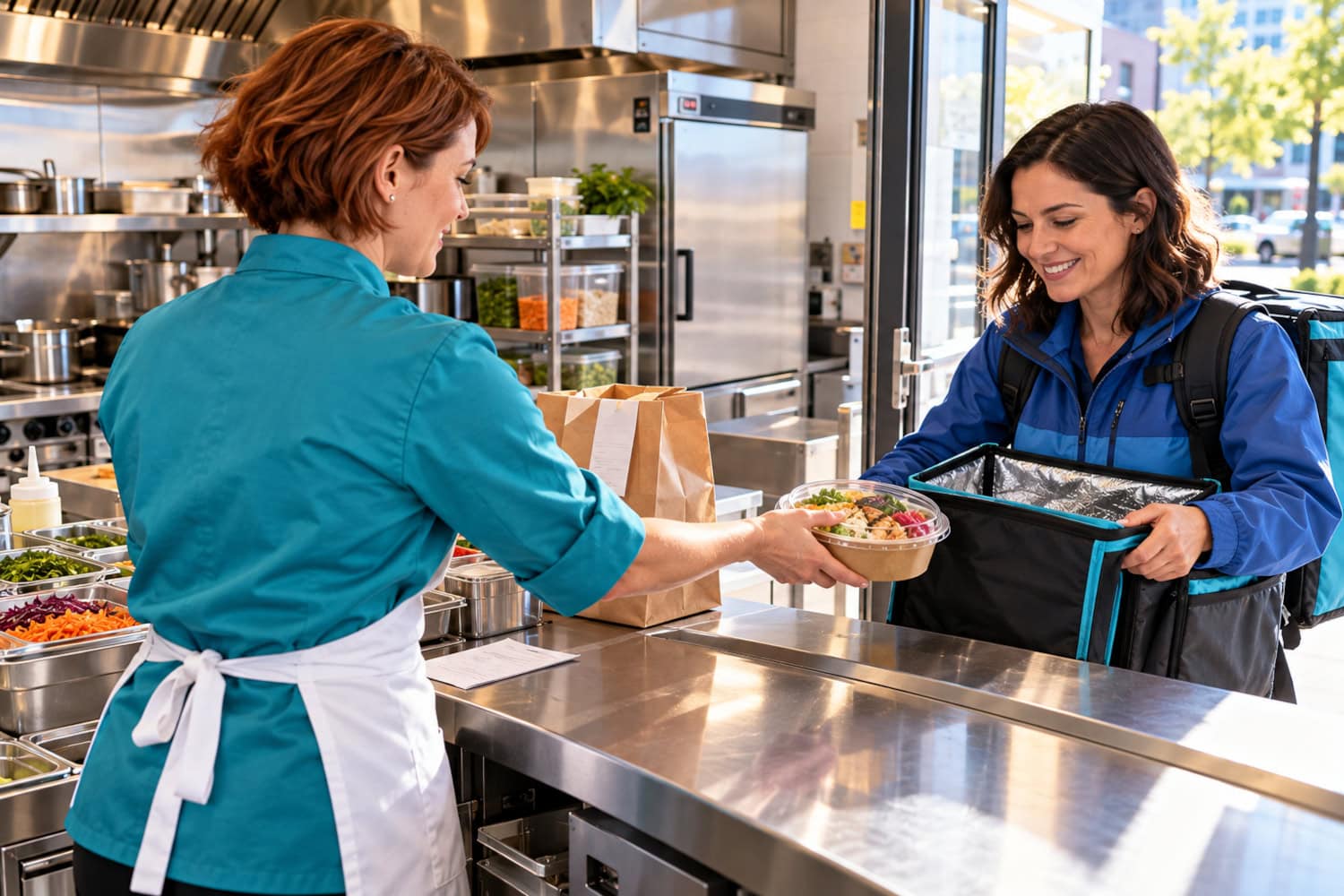
A ghost kitchen prepares food for delivery or pickup without running a conventional dining room.
The physical kitchen, the brand customers see, and the ordering channel are separate decisions; one kitchen can fulfill orders for a single brand or several.
For a first launch, use this sequence. The later choices about expansion or acquisition are optional, not obligations.
| Stage | Decision | Move forward when |
|---|---|---|
| 1. Business model | Decide how orders will be prepared and sold | You can describe the kitchen, brand, and sales channels separately |
| 2. Kitchen format | Compare existing, shared, and dedicated space | You understand the likely rent, equipment, and commitment |
| 3. Demand | Identify repeat customers and realistic order periods | You have evidence of interest beyond enthusiasm for the cuisine |
| 4. Location | Check the delivery area and driver access | The address reaches customers and can support food preparation |
| 5. Economics | Calculate cost per order and break-even volume | Required orders look attainable without wishful assumptions |
| 6. Permissions | Establish the business and confirm approvals | The relevant agencies identify a lawful path to opening |
| 7. Contracts | Negotiate space and ordering terms | Obligations and exit costs are clear in writing |
| 8. Equipment | Check the kitchen against the actual menu | Equipment and utilities can handle expected peaks |
| 9. Operations | Set up order flow and menu execution | Staff can produce and hand off correct, safe orders |
| 10. Course correction | Set rules for changing or expanding | Results can be judged against the original model |
| 11. Alternatives | Review purchases and turnkey offers if relevant | Claimed earnings and obligations survive due diligence |
| 12. Launch | Open in stages and measure results | Permits, food tests, staff, and order systems are ready |
2. Ghost kitchen formats and entry costs
A shared kitchen limits the space you must commit to, but booking restrictions and storage limits can make it awkward when orders arrive unpredictably.
A dedicated kitchen gives more control and exposes the founder to more fixed cost.
| Format | Initial cost exposure | Best fit | Main constraint |
|---|---|---|---|
| Virtual brand inside an existing licensed restaurant | Lower if existing equipment and staff have spare capacity | Restaurant owner filling unused hours | Extra tickets can disrupt the main kitchen |
| Shared commercial or commissary kitchen | Rental charges, deposits, storage, and possible equipment gaps | New founder testing one concept | Restricted access, shared facilities, and variable availability |
| Private space in a managed ghost-kitchen facility | Deposits, recurring rent, services, and contract commitments | Concept needing consistent production access | Fixed payments and provider restrictions |
| Independent dedicated kitchen | Build-out, equipment, utilities, permits, and lease exposure | Established operation with reliable volume | Highest exposure before steady demand is proven |
For a first independent launch, shared approved space is generally the safer format to investigate before a dedicated build-out.
An existing restaurant with genuine spare capacity has a different starting advantage, but should account for the extra work rather than treating it as free labor.
3. Prove local orders before accepting kitchen rent
A delivery-only brand loses the incidental discovery that a storefront creates.
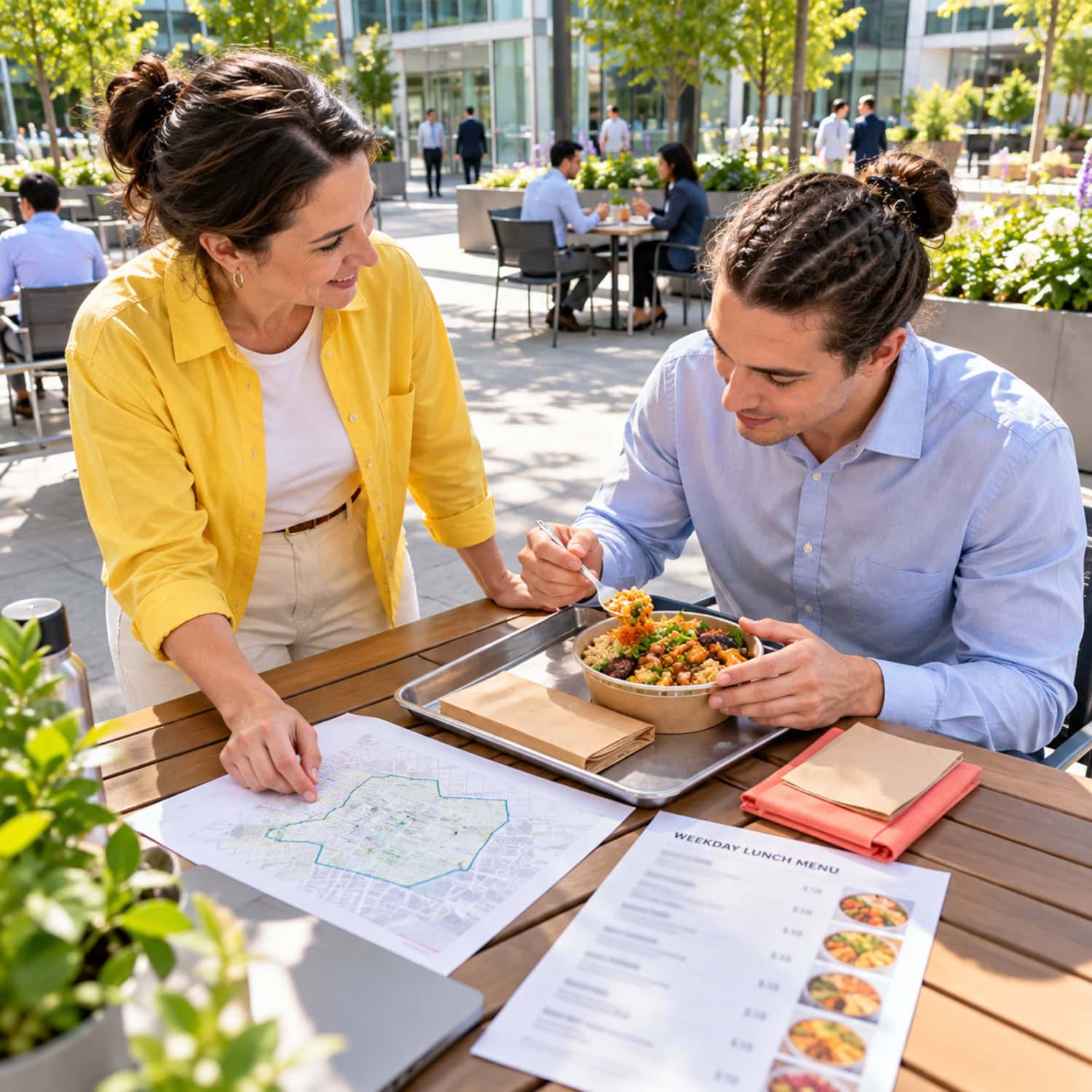
Before taking on fixed kitchen costs, prove that people in the actual service area will order the specific food at a price that can leave money after delivery expenses.
Start with a narrow customer and eating occasion, such as office lunches or late-night meals near students.
The audience must be reachable during the hours you plan to operate.
A cuisine may have little direct competition because it is underserved, or because few people want it at that time and price.
Use this demand-checking sequence:
- Map the customer: Identify the neighborhoods and meal periods your kitchen could serve within realistic delivery times.
- Study competing orders: Compare nearby menus, pricing, photos, customer feedback, and availability during those periods.
- Test the offer: Show potential customers an actual menu with prices and obtain concrete buying interest rather than general compliments.
- Check repeat potential: Determine whether the intended customer would order weekly, only occasionally, or mainly for a special event.
- Revisit the cost model: Reject an offer that appears appealing only with deep discounts or heavy paid promotion.
Picture a kitchen that rents cheaply outside the busy delivery area.
The address saves money each month but adds distance between the food and its intended buyers.
That can mean fewer customers in range, slower handoffs, and meals arriving in worse condition. Cheap space has not solved the demand problem.
4. Choose a location for the delivery area
A ghost kitchen still has a location problem even without a dining room.
Its address determines which customers appear inside the app’s delivery radius, how long food travels, and whether drivers can collect orders without interrupting production.
Check the location at the hours customers are likely to order, not just during a convenient daytime visit.
Office demand, student demand, and late-night demand follow different schedules.
Confirm reliable pickup access, loading rules, security, parking or stopping arrangements, and enough staging space for completed orders.
A suitable commercial kitchen must also have the right permitted use, cooking infrastructure, refrigeration, washing facilities, storage, and ventilation for the proposed menu.
Have the local zoning and health authorities confirm what the site can support before making an irreversible commitment.
For a shared kitchen, ask whether the reserved hours cover preparation, service, cleaning, and delivery handoff.
Paying only for cooking time is little help if food arrives in bursts and access ends during the rush.
5. Startup costs and break-even orders
The largest startup cost variable is the kitchen arrangement.
A shared facility may avoid extensive build-out, while a dedicated operation brings deposits, installation, equipment, and higher recurring overhead.
There is no useful universal dollar figure across these formats, so build a budget for the specific address and menu.
| Startup or ongoing cost | What to budget for |
|---|---|
| Kitchen access | Rent or hourly charges, deposits, storage, utilities, and access restrictions |
| Facility and equipment | Refrigeration, cooking stations, ventilation, repairs, and any required installation |
| Legal and risk costs | Registration, food-service approvals, inspections, insurance, and professional help where needed |
| Launch stock | Ingredients, containers, bags, labels, and cleaning materials |
| People and systems | Paid preparation and packing time, ordering software, and training |
| Customer acquisition | Menu photography, marketplace promotion, and direct-order marketing |
| Operating reserve | Fixed bills and unexpected expenses during slower-than-planned sales |
The useful question is how much each fulfilled order leaves to pay kitchen overhead.
Track the average check, food cost percentage, labor percentage, and prime cost (food plus labor) along with the delivery fees that sit outside those restaurant measures.
Contribution per order = order revenue – ingredients – variable labor – packaging – platform and promotional charges – refunds and payment allowances.
Monthly operating result = orders fulfilled x contribution per order – fixed monthly costs.
Here is one complete calculation using illustrative numbers, not industry benchmarks:
| Item | Illustrative amount |
|---|---|
| Average order revenue | $30.00 |
| Ingredients | $9.00 |
| Variable preparation and packing labor | $5.00 |
| Packaging | $1.50 |
| Platform commission and promotions | $7.00 |
| Refund and payment allowance | $0.50 |
| Contribution left per order | $7.00 |
| Monthly fixed costs, including kitchen overhead | $3,500 |
| Expected monthly orders | 700 |
| Expected monthly operating result | $1,400 |
| Break-even monthly orders | 500 |
At a $30 average check, the example has food cost of 30%, variable labor of about 16.7%, and prime cost of about 46.7% before the delivery-related charges.
If the kitchen trades 26 days each month, it needs about 20 orders per trading day to cover the stated fixed costs.
Now cut expected sales in half. At 350 monthly orders, variable costs fall with volume, but the $3,500 fixed bill remains.
Contribution becomes $2,450, leaving a $1,050 monthly operating loss.
The illustration excludes owner distributions, income taxes, debt payments, and major unplanned repairs, which need their own budget treatment.
A business can post attractive sales while losing money.
Stress-test the volume, avoid assuming every delivery-app order is profitable, and maintain enough cash to survive disappointing opening weeks.
If financing is necessary, compare repayment obligations against the lower-sales case before borrowing.
The US Small Business Administration (SBA) offers startup and financing information, but financing does not repair weak per-order economics.
6. Business registration and food-service permits
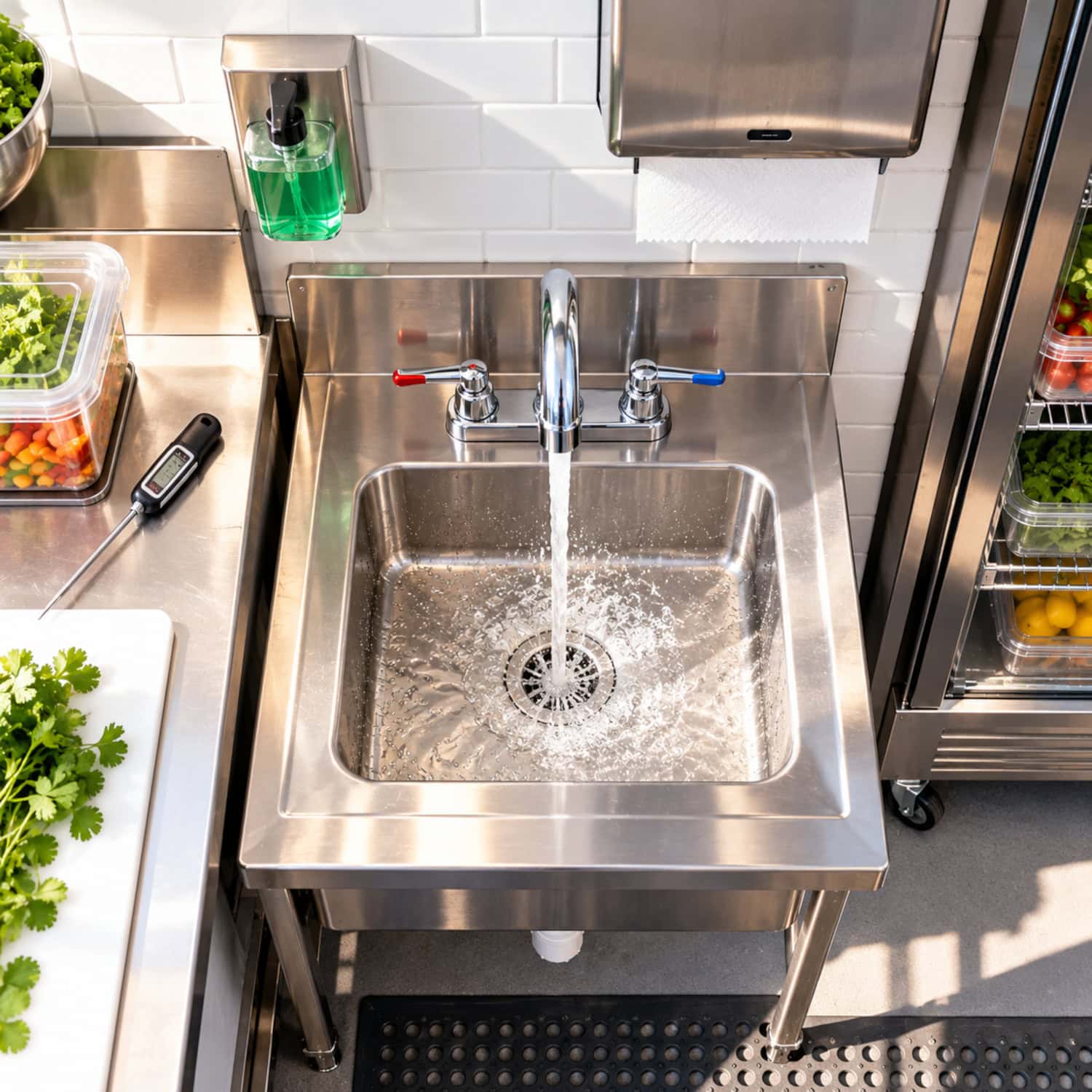
A ghost kitchen selling prepared meals generally needs food-service approval tied to the facility and activities.
The health department’s permit and any required plan review or inspection are central, while zoning, building, and fire approvals depend on the location and cooking equipment.
- Set up the business: Choose a legal structure, register where required, obtain an employer identification number (EIN) where applicable, and establish tax and business records. A limited liability company (LLC) is an option, not a universal requirement.
- Confirm local use: Ask the zoning or planning office whether the proposed kitchen and delivery or pickup operations are allowed at the address.
- Confirm food approval: Ask the city or county health department which food-service permit, plan review, inspection, and food-manager or food-handler certifications apply.
- Confirm building and fire requirements: Ask the building and fire authorities about occupancy, hood and ventilation systems, fire protection, gas, and electrical work.
- Check taxes and employment rules: Confirm state and local sales-tax obligations and employer requirements. Workers’ compensation and payroll obligations must be addressed when employees are hired.
- Price appropriate insurance: Discuss general liability, food-related liability, property or equipment, and employee coverage with a licensed insurance professional.
A shared kitchen’s existing permits do not automatically give every tenant permission to operate any menu under any brand.
Confirm whether you need your own permit, whether the kitchen’s license covers your work, and how inspectors treat shared storage and preparation.
State and local requirements vary.
Home kitchens face a separate gate. Cottage food rules differ by jurisdiction and often restrict which foods and sales methods qualify.
Do not assume that cooking prepared delivery meals in a residential kitchen is permitted; ask the local health department and zoning office first.
Mobile production introduces commissary requirements in places that regulate food trucks or other mobile units.
Alcohol service requires a separate licensing check and is outside this launch model.
7. Kitchen leases and delivery-platform contracts
A landlord or managed-kitchen provider can quote an attractive monthly price while leaving the operator responsible for deposits, maintenance, service charges, and a costly exit.
Read the complete deal against your low-sales budget before signing.
Use these questions when reviewing kitchen space:
- Which utilities, equipment, storage, cleaning services, and shared facilities are included in the stated price?
- What hours and preparation methods are permitted, and what happens when access conflicts with another tenant?
- Who repairs the hood, refrigeration, electrical supply, and other critical systems, and who pays?
- What permits or inspections are already held by the facility, and what approvals must my own business obtain?
- What are the deposit, minimum commitment, price increases, cancellation terms, and costs of leaving early?
- Can delivery drivers enter safely, and can I offer customer pickup or catering from this address?
Ordering-channel agreements deserve the same attention.
Compare DoorDash, Uber Eats, and Grubhub terms as actual contracts rather than assuming a universal commission.
Examine fees, promotions, refunds, payment timing, delivery territory, customer information access, branding rights, and termination provisions.
Direct ordering can reduce some marketplace dependence, but the operator then needs a reliable way to attract customers and arrange fulfillment.
A lower commission is useful only if acquiring and serving the order does not cost even more.
8. Equipment and kitchen inspection
The menu determines equipment, power, storage, and staff movement.
A kitchen that has ovens and sinks may still lack enough cold storage or a suitable hood for a specific concept.
Consumer-grade equipment is a poor substitute if it cannot sustain peak commercial production.
Complete this inspection before buying equipment or accepting a kitchen:
- Match the menu to the line: List the cooking, holding, prep, and sanitation tasks each dish needs.
- Check throughput: Run the likely peak ticket mix and identify where the station slows down or causes queues.
- Verify cold and dry storage: Allow room for inventory, labeled ingredients, finished meals, and safe separation where needed.
- Confirm infrastructure: Have qualified professionals assess applicable ventilation, electrical, gas, fire protection, and installation requirements.
- Inspect condition: Review service history, temperature performance, maintenance responsibility, and replacement-part access for supplied equipment.
- Check packing and dispatch space: Ensure hot and cold items can be packed correctly without drivers obstructing the cooking line.
- Price gaps before commitment: Include missing tools, repairs, installation, and the time required to obtain any related approvals.
Lease expensive specialty equipment only when the commitment fits the expected order volume.
Adding another virtual brand with a separate fryer, prep table, and storage requirements can erase the savings from sharing a kitchen.
9. Menu design and daily operations
An order can look profitable on a spreadsheet and still fail at dinner rush.
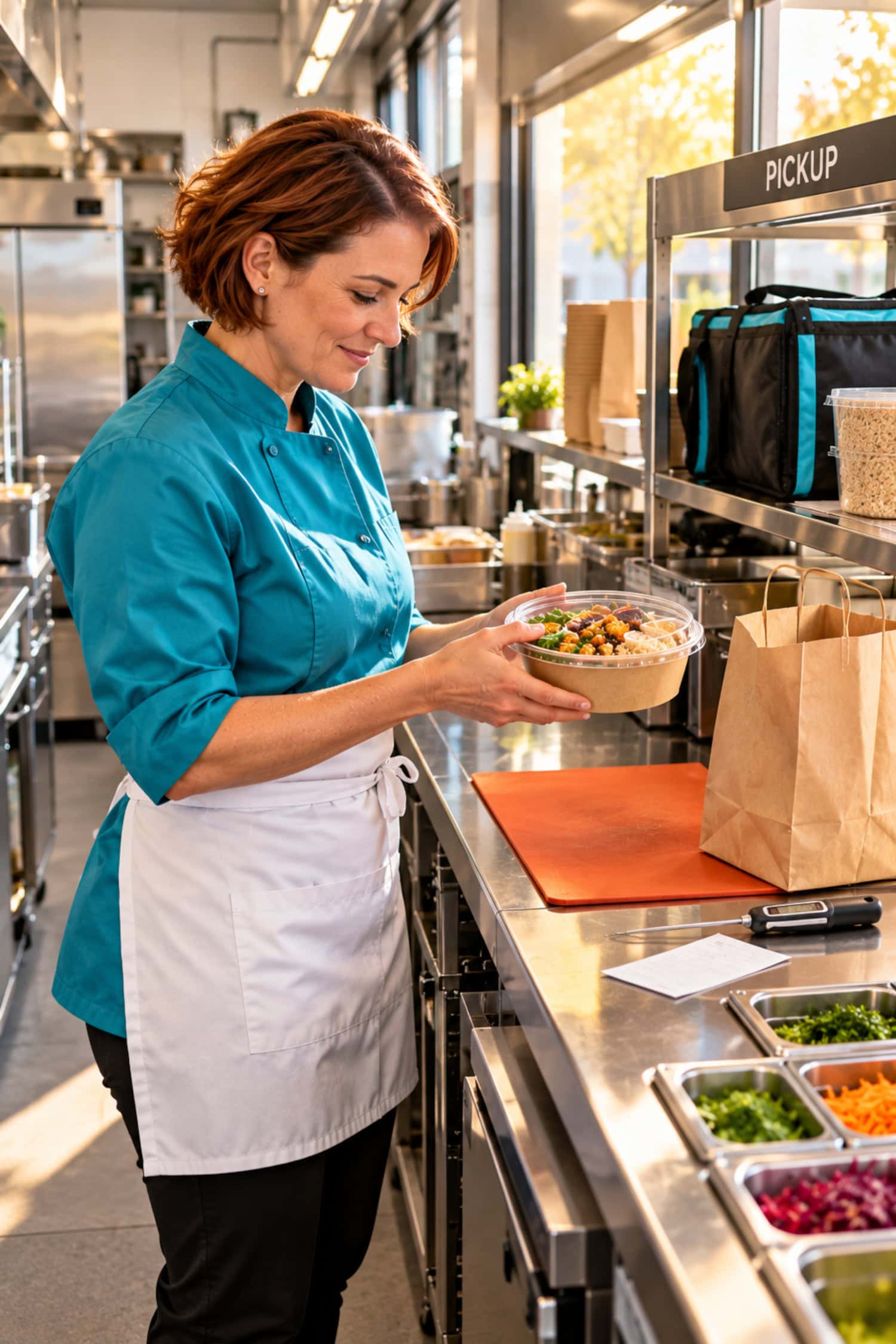
Ghost kitchens need a short, repeatable menu, accurate ticket routing, enough staff at peak times, and packaging that preserves the food through handoff and travel.
Ingredient overlap matters more than menu-item count by itself.
Multiple dishes using the same carefully managed ingredients simplify purchasing and preparation.
Adding different proteins, sauces, cooking methods, and storage requirements for each virtual brand creates the workload of another restaurant even if the online menus look small.
Test actual delivery conditions.
Pack a full order, hold it for a realistic pickup delay, transport it, and inspect temperature, texture, appearance, leakage, and completeness.
Food that depends on being eaten straight from the fryer needs special scrutiny.
Packaging cost belongs in the selling price calculation from Section 5.
For daily control, record the following:
- Orders and average check by channel and meal period.
- Ingredients used, food waste, packaging, refunds, and paid promotions.
- Prep times, missed items, driver delays, and delivery complaints.
- Paid labor hours, station bottlenecks, repeat purchases, and customer feedback.
A point-of-sale (POS) system captures transactions, while a kitchen display system (KDS) routes the preparation tickets.
If a restaurant operates both its original brand and a virtual brand, verify that each order reaches the right stations and packing staff.
Different online storefronts do not automatically create separate kitchen capacity.
Marketing starts with reliable descriptions, accurate photographs, visible prices, and consistent fulfillment.
App listings can provide discovery, but the business still needs repeat buyers.
Test direct ordering, pickup, or catering where the permits, premises, and customer demand support them.
Be clear about who prepares the food; confusing virtual brands and misleading imagery can weaken trust before the first repeat order.
10. Know when to change course or expand
Judge a ghost kitchen against contribution per order, realistic daily volume, fulfillment quality, and fixed-cost coverage.
More orders are useful only when they leave enough money after the extra food, labor, packaging, and channel expenses.
| What you observe | Likely problem to investigate | Practical response |
|---|---|---|
| Plenty of orders but persistent losses | Price, app fees, promotions, food cost, or staffing | Rework unprofitable items and channels before buying more traffic |
| Slow orders despite decent reviews | Demand, delivery area, positioning, or discovery | Recheck meal periods, target customers, and visibility |
| Refunds and poor delivery reviews | Cooking consistency, packaging, handoff, or transit | Fix the meal and dispatch process before promotion |
| Long queues during a second brand’s rush | Shared labor, equipment, and prep capacity | Reduce menu complexity or separate peak workloads |
| Stable orders with repeat buyers and positive contribution | A concept that may support broader distribution | Test additional hours, pickup, or catering without committing to another site immediately |
A multi-brand launch is particularly tempting when the cooking space is already paid for.
Expansion only makes sense when additional brands reuse ingredients and capacity without undermining the service that is already earning money.
When the kitchen repeatedly loses money at attainable sales, a smaller menu, shorter commitment, different channel, or exit may be more rational than another advertising campaign.
11. Buying a ghost kitchen and evaluating turnkey offers
Buying an existing operation can offer equipment, an established workflow, and an order history.
Those assets have little value unless sales, profit, legal permissions, and the right to occupy the kitchen are independently confirmed.
Use this due-diligence checklist before paying a seller or turnkey provider:
- Reconcile orders: Match ordering-platform statements, bank deposits, refunds, promotions, and point-of-sale records over multiple periods.
- Rebuild profitability: Include ingredient purchases, paid labor, rent, utilities, delivery fees, maintenance, and the owner’s actual work.
- Inspect operating assets: Test equipment, storage, packaging flow, and maintenance records with qualified help where appropriate.
- Verify permissions: Confirm which food permits, inspections, registrations, and certifications must be issued again or cannot transfer.
- Verify contracts: Obtain written confirmation about kitchen lease assignment, platform accounts, delivery agreements, and required consent.
- Test business continuity: Check the sources of repeat orders, ratings, ingredient suppliers, key workers, and access to the brand’s customer channels.
- Calculate exit exposure: Identify assumed debt, deposits, minimum terms, equipment obligations, and what happens if sales fall.
| Common claim | Operating reality |
|---|---|
| No dining room means low operating costs | Rent, labor, packaging, delivery fees, and promotion can consume the savings |
| The platform will bring customers automatically | Listings provide access, but visibility and repeat demand still need work |
| Multiple virtual brands multiply profit | Each concept may add ingredients, staff work, and peak-time congestion |
| Fully equipped means ready to open | Site approvals, permit responsibilities, repairs, and menu suitability still need checking |
| Seller revenue proves the business is profitable | Sales must be reconciled against real expenses and transferable operating rights |
Be particularly wary of a long commitment justified by optimistic forecasts.
A turnkey package reduces some setup work, but it does not transfer the operator’s risk to the provider.
12. Ghost kitchen launch plan
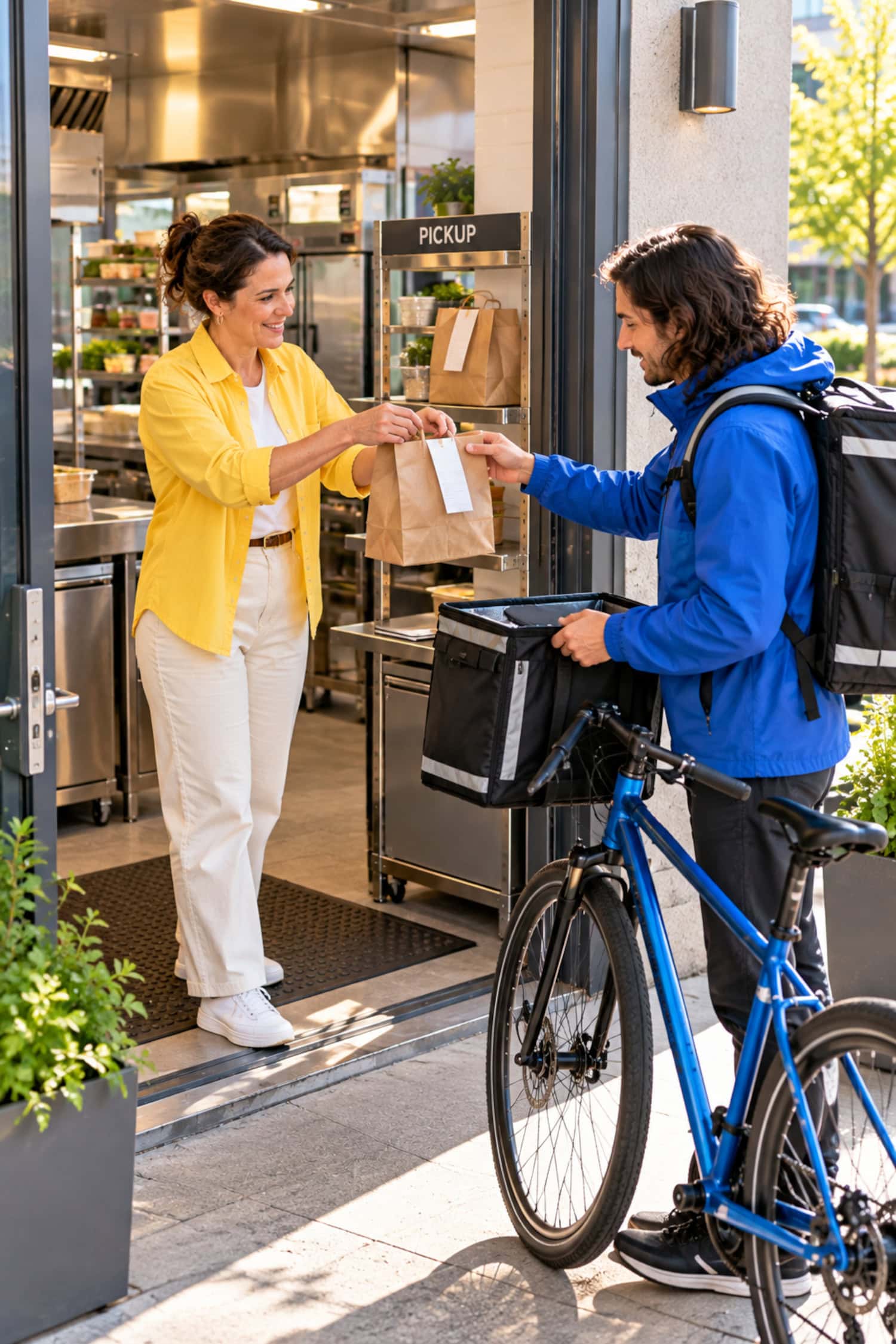
The safest launch is staged around permission, repeatable food, and proven order economics.
A limited opening provides information about demand and execution before the founder commits more capital.
- Before spending: Choose the kitchen format, study local demand, sketch the menu, and build both expected-volume and half-volume budgets.
- Before signing: Establish the contracting business, confirm the site can qualify for food-service approvals, inspect equipment, and examine the lease and marketplace terms.
- Before opening: Complete required approvals and inspections, arrange insurance, train workers, test ticket routing, and deliver trial meals under realistic travel conditions.
- At opening: Limit the menu and operating periods to what the crew can fulfill consistently. Record every order, complaint, promotion, and refund.
- During the first 30 to 90 days: Compare actual order volume and contribution with the break-even model. Change weak items or hours, and decide whether repeat demand justifies continued rent.
Do not use a projected opening date as a reason to sell meals before approvals are complete.
Food-service inspections and site work must determine the actual start of trading.
FAQ
How much does it cost to start a ghost kitchen business?
It depends on the chosen premises, equipment already included, deposits, permits, staffing, and cash reserve; a shared kitchen typically avoids more upfront build-out than a dedicated facility.
See Sections 2 and 5.
Can I start a ghost kitchen from home?
Only if local health, zoning, and home-food rules expressly permit your menu and sales method; prepared delivery meals often require an approved commercial kitchen.
See Section 6.
Do I need an LLC to operate a ghost kitchen?
No, an LLC is not a universal requirement, although business structure affects administration, taxes, and liability. See Section 6.
How many orders does a ghost kitchen need to break even?
In the illustrative example, 500 orders per month cover $3,500 in fixed costs at $7 contribution per order. See Section 5.
Can a ghost kitchen make money using only delivery apps?
Yes, if sales volume and contribution after commissions and other costs cover fixed expenses, but platform-only demand increases exposure to marketplace charges and visibility.
See Sections 5 and 9.
Is adding a virtual brand to an existing restaurant easier?
It can be cheaper to launch when approved space and genuine spare capacity exist, but extra tickets and ingredients can overload the current line.
See Sections 2 and 9.
Conclusion
A viable ghost kitchen starts with evidence that nearby customers will pay enough for meals the kitchen can deliver profitably.
Keep the first operation small enough that one poor sales month does not force a bad contract or an unsafe shortcut.
- Verify demand before renting: Identify the reachable customers, meal periods, and prices before assuming orders will arrive.
- Protect the downside: Confirm permits and contracts, then budget for a half-volume month using actual per-order costs.
- Expand only on results: Add hours, channels, or brands after repeat orders, food quality, and contribution justify the extra work.
Further reading
- U.S. Small Business Administration: Explore business-startup and financing resources before committing to shared-kitchen rent or a dedicated build-out.
- Google Business Profile verification discussion: Review verification obstacles involving signage and kitchen addresses for a delivery-focused food brand.
- DoorDash virtual restaurant brand guidance: This delivery platform’s merchant page explains the additional-brand model for an existing restaurant kitchen.
- Square community discussion on ghost kitchen order routing: See practical issues separating a virtual brand’s menu and tickets from existing restaurant orders.
- Pizza Making forum discussion on ghost kitchen planning: Read specialist discussion of kitchen infrastructure, zoning, and production-equipment decisions.
- Ghost Kitchens operator discussion: Explore real operating tradeoffs around delivery revenue, ingredient overlap, pickup, and catering.