To start a hot dog business, first ask the local health department what your proposed menu and mobile setup require.
Compare carts, stands, and trailers, identify customers at realistic selling sites, and calculate what each outing must earn.
Register the business, arrange site agreements, obtain necessary approvals, select compliant equipment, and open after required inspections.
The critical mistake is buying a cart before confirming that both the food operation and the selling location can be approved.
Plan on roughly $3,000 to $30,000 for a basic cart-based launch, with more elaborate setups potentially costing more.
A health permit or mobile food approval is usually central, but permission to sell on a sidewalk, at an event, or on private property is a separate matter.
Weather, commissary access, travel, food waste, and hours spent cleaning can consume the profit suggested by an attractive hot dog markup.
Last fact-checked: October 11, 2026
This guide is for first-time US owners considering one hot dog cart, temporary stand, or small trailer, including a part-time operation. It covers demand checks, budget decisions, permissions, equipment, daily work, and expansion choices. A full-service restaurant or large food truck needs a different financial and operating plan.
1. How a hot dog business works and the launch sequence
A small hot dog business earns money by serving customers at permitted sites, private properties, and events.
The format is simple, but the owner must coordinate food safety, site access, service capacity, and enough transactions to pay the bills.
| Stage | Decision | Move forward when |
|---|---|---|
| Operating model | Decide on part-time or regular vending | Available working hours and income expectations are realistic |
| Format | Compare cart, stand, trailer, and truck | The format suits transport, menu, and available capital |
| Demand and site | Identify likely buyers and usable locations | Customer traffic and a possible path to site permission exist |
| Economics | Build a complete startup and operating budget | Conservative sales could cover costs and worthwhile owner earnings |
| Permissions and agreements | Confirm business, food, fire, and site obligations | Authorities have explained the approval path and agreements are viable |
| Equipment and service | Specify equipment, menu, and operating routine | The setup can be approved and handled consistently |
| Acquisition alternatives | Investigate existing businesses and packaged offers | Claimed value and contractual rights withstand scrutiny |
| Launch | Complete approvals, inspect the operation, and open | Facilities, staffing, equipment, and site access are ready |
| Review and growth | Evaluate weak locations and possible expansion | Actual results justify continuing or adding capacity |
An owner who wants weekend event income has a different staffing, transport, and cash-flow problem from one selling weekday lunches outside offices.
Pick which job the business is supposed to do before choosing hardware.
2. Hot dog cart and stand formats
A cart usually offers the lowest-complexity route into mobile hot dog service, while a trailer or truck offers more production space at a higher potential cost.
A stand can be inexpensive to set up, but the site, equipment, and local food-handling rules still determine its real entry cost.
| Format | Entry-cost position | Best for | Main constraint |
|---|---|---|---|
| Pushcart or towable cart | Usually lower than a fully equipped truck | Compact menus and repeat street or private-property service | Limited storage, food preparation, and capacity |
| Temporary stand or event booth | Highly dependent on event rules and rented equipment | Testing festivals and occasional events | Event fees, setup time, and temporary-food approvals |
| Food trailer | Generally higher equipment and transport commitment | Larger menus and higher-volume service | Tow vehicle, parking, utilities, and inspections |
| Food truck | Usually the greatest vehicle and equipment commitment | Broader menus and a larger working crew | Vehicle maintenance, operating costs, and site access |
For a first launch, this article concentrates on a cart or modest stand.
A trailer or truck makes sense when expected demand and a menu genuinely require its additional capacity, not merely because it looks more impressive.
3. Find customers before estimating sales
Hot dog demand depends on people who are ready to stop and buy during your actual vending hours.
Cars passing a busy road contribute little if drivers cannot park or leave the traffic stream safely.
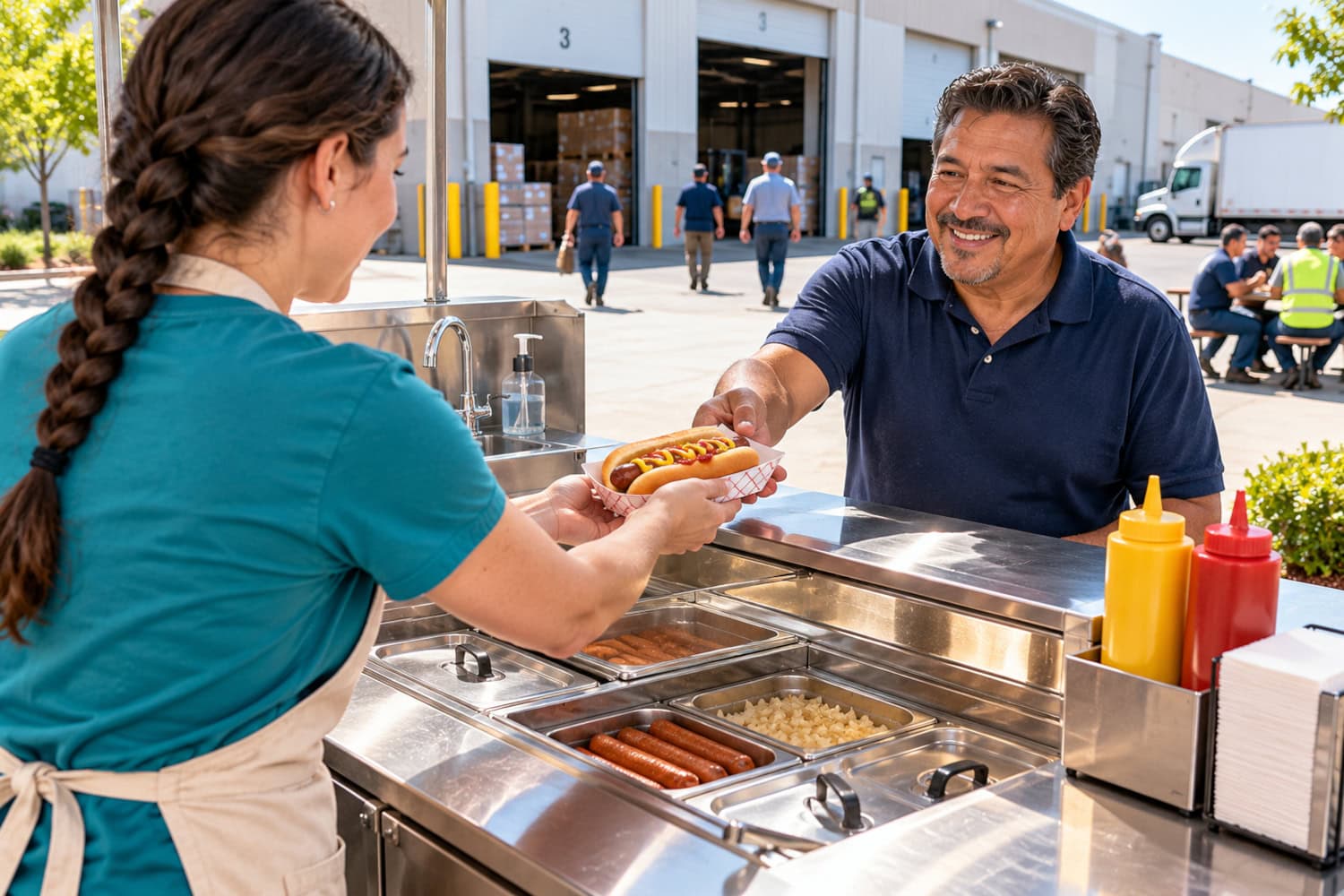
Look for repeat lunchtime demand near workplaces, warehouses, or other concentrations of customers.
Events can deliver bursts of business, but attendance, competing vendors, travel, and admission or vendor fees may erase the advantage.
Parks and sidewalk sites bring additional restrictions that must be checked.
Use a field check before committing to a site:
- Visit on the weekdays and at the hours you intend to serve, not just when the area looks busiest.
- Count people who could realistically walk to the stand and observe whether they already buy quick meals nearby.
- Note parking, safe access, competing food options, visibility, and the distance from your proposed serving position.
- Ask the property owner or event organizer whether food vending is considered and which approvals or fees apply.
- Compare a slow-day sales estimate with the volume required by your financial model in Section 5.
A warehouse district with regular lunch breaks may offer a steadier audience than a picturesque corner whose visitors are mostly passing through.
Neither is a promising site until access and purchasing behavior support it.
4. Location permission and health approval must fit together
The strongest first decision is to settle an approvable menu and selling site before buying a hot dog cart.
A cart can pass food safety inspection yet still be prohibited from selling at the chosen corner; permission from a property owner also does not replace a public vending permit.
Start by contacting the health department responsible for the proposed operating area.
Describe exactly what you will sell, how food will be stored and heated, what the cart contains, and where cleaning and preparation would take place.
Ask which office handles vending-site authorization, zoning, sidewalk restrictions, and fire review.
Then distinguish the kinds of access you are pursuing:
| Selling site | Permission question | Commercial question |
|---|---|---|
| Public sidewalk or street | Does the local government allow vending at this specific location? | Can customers stop without blocking movement? |
| Private business lot | Will the owner grant written access, and do local rules allow the use? | Are employees or visitors present at meal times? |
| Park | Does the park authority allow food vending there? | Do visitors arrive at predictable times? |
| Festival or fair | Does the organizer accept this vendor and satisfy applicable location requirements? | Will expected sales cover the fee and all event work? |
A cart’s ability to roll from place to place does not mean its permits travel with it.
Confirm the geographic scope of approvals before planning a multi-city route.
5. Hot dog business startup costs and break-even math
For a first cart-based hot dog business, roughly $3,000 to $30,000 is a useful preliminary planning range, not a guaranteed price of admission.
Individual budgets vary sharply with used versus new equipment, required modifications, site costs, facilities, and the amount of cash retained for early operations.
| Startup cost | What to budget for |
|---|---|
| Cart or stand | Purchase or rental, inspection, repairs, approved modifications |
| Supporting facilities | Commissary access, storage, water, and wastewater handling |
| Legal and site costs | Registration, permitting, inspection, insurance, event or property fees |
| Supplies | Hot dogs, buns, condiments, packaging, cleaning supplies, initial stock |
| Logistics | Transport or towing, fuel, setup equipment, power or fuel supply |
| Working cash | Slow days, spoiled stock, cancellations, and repairs before sales stabilize |
Do not finance only the cart and assume the first weekend pays for the rest. Keep a cash reserve for recurring bills and low-sales periods.
For financing, compare the total payments and repayment schedule against conservative earnings, rather than the advertised monthly payment alone.
A worked monthly sales example
The money remaining after the direct costs of an order is its contribution. That amount pays overhead and, if anything remains, the owner.
Monthly operating surplus = monthly orders x (average order value – variable cost per order) – monthly fixed costs.
These are illustrative numbers, not typical industry benchmarks.
They assume 20 selling days per month, an average customer order of $7, and an owner who performs the vending work without a separate payroll expense.
| Item | Illustrative calculation | Monthly amount |
|---|---|---|
| Customer orders | 50 per day x 20 days | 1,000 orders |
| Sales | 1,000 x $7 | $7,000 |
| Food and serving supplies | 1,000 x $2.20 | $2,200 |
| Payment costs and other per-order expenses | 1,000 x $0.30 | $300 |
| Contribution after variable costs | $7,000 – $2,500 | $4,500 |
| Commissary and site charges | $600 + $500 | $1,100 |
| Insurance, transport, and other overhead | $200 + $300 + $400 | $900 |
| Operating surplus before owner pay and taxes | $4,500 – $2,000 | $2,500 |
Food and serving supplies equal about 31% of revenue in this example. Paid staff would add labor expense.
Food cost and paid labor together make up prime cost, a useful warning measure when a menu or staffing plan grows.
Now stress-test the same cart at half the expected volume, or 25 orders a day.
Monthly revenue falls to $3,500 and variable expenses fall to $1,250. Fixed expenses remain $2,000, leaving only $250 before owner pay and taxes.
The owner still has shopping, setup, transportation, service, and cleanup to do.
At a $4.50 contribution per order, covering $2,000 in monthly fixed costs takes about 445 orders, or roughly 23 per selling day.
That covers overhead only.
Decide separately what pay would make the working hours worthwhile, and account for taxes, debt payments, and equipment replacement in your cash plan.
6. Hot dog business licenses and insurance
A US hot dog vendor generally needs food-service approval from the responsible local or state health agency, plus any business and site permissions required in the operating area.
Approval details depend on the menu, equipment, jurisdiction, and location, so a business license alone does not authorize food vending.
| Requirement | What it means for a hot dog vendor | Where to check |
|---|---|---|
| Business registration | Register a business name or entity where required | State business filing office and local business licensing office |
| Federal tax identification | Obtain an Employer Identification Number (EIN) if the business’s circumstances require one | Internal Revenue Service (IRS) |
| Sales tax | Register to collect and remit tax where applicable | State revenue or tax department |
| Health permit and plan review | Submit the menu, equipment details, and operating procedures for review where required | City, county, or state health department |
| Food safety training | Obtain required food handler or food protection certification | Health department |
| Commissary arrangement | Document an accepted facility for preparation, cleaning, storage, and waste where required | Health department and approved facility |
| Fire inspection | Obtain approval for cooking and fuel equipment where applicable | Local fire authority |
| Zoning and vending location | Confirm allowed streets, parks, private lots, and events | City licensing or zoning office and relevant property authority |
| Alcohol service | Secure separate permission if alcohol would be sold | State and local alcohol licensing authorities |
An LLC (limited liability company) is a choice of legal structure, not a universal prerequisite to selling hot dogs.
It also does not excuse unsafe food handling or personal misconduct.
Discuss unusual ownership, tax, or liability questions with a qualified accountant or attorney before filing.
For insurance, seek quotes for general liability and coverage appropriate to food-related claims, the cart and its equipment, and vehicles or trailers used in the operation.
If you hire workers, check workers’ compensation and employment obligations with the state labor or insurance authority.
A home kitchen is not automatically an approved base for hot dogs.
Cottage food rules typically concern specified home-prepared foods and differ by jurisdiction; ask the health department whether any part of your intended preparation or storage is permitted at home.
7. Commissary and location agreements
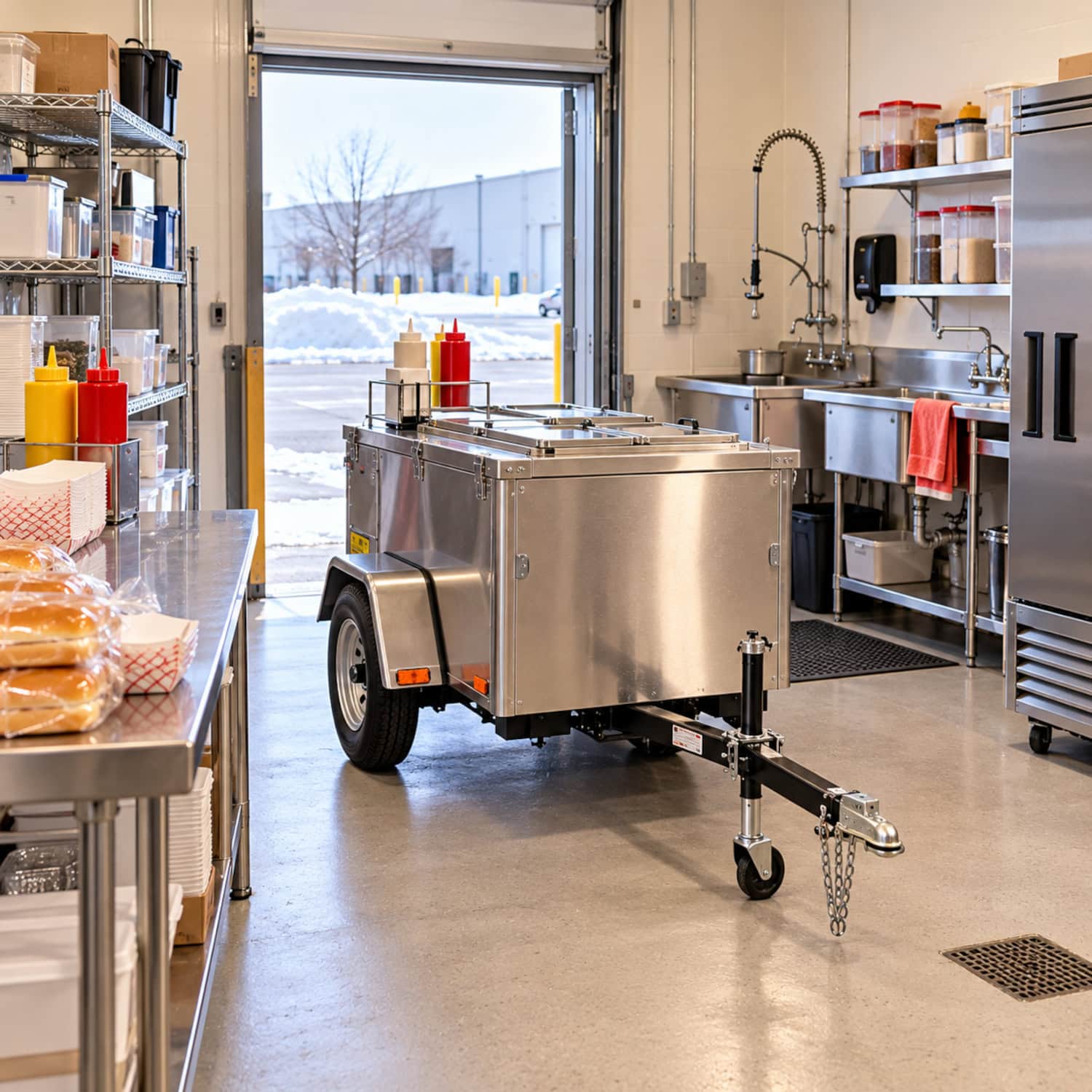
A hot dog cart with working burners can still sit idle without a health-department-accepted commissary arrangement.
An available restaurant kitchen is useful only if the authority accepts the facility and the agreement covers the work your operation requires.
Check its food storage, cleaning facilities, water and wastewater arrangements, access hours, distance from sites, and monthly charges.
A long drive to the commissary can make a seemingly profitable short lunch service impractical.
For commissary and site agreements, get the following terms in writing:
- Approved activities, access days and hours, and any restrictions on food storage or preparation.
- Rent, event fees, deposits, utilities, insurance requirements, and additional charges.
- Agreement length, renewal, termination, and circumstances under which you must move.
- Responsibility for cleaning, waste, damage, equipment breakdowns, and lost access.
Before signing with an event organizer or property owner, ask:
- Exactly where may the cart or stand be placed, and during which hours?
- Which permits or insurance certificates must be presented before service?
- What happens if the event is canceled, attendance is poor, or access is withdrawn?
- Are competing food vendors allowed, and are electricity, water, or waste facilities provided?
Permission to use a location is valuable only if it is sufficiently clear to plan inventory, staffing, and repeat visits around it.
8. Hot dog cart equipment and used-cart inspection
An attractive price on a used hot dog cart means little if the sinks, holding equipment, or cooking system fail local plan review.
Choose equipment from the written operating requirements, then compare its full purchase and repair cost.
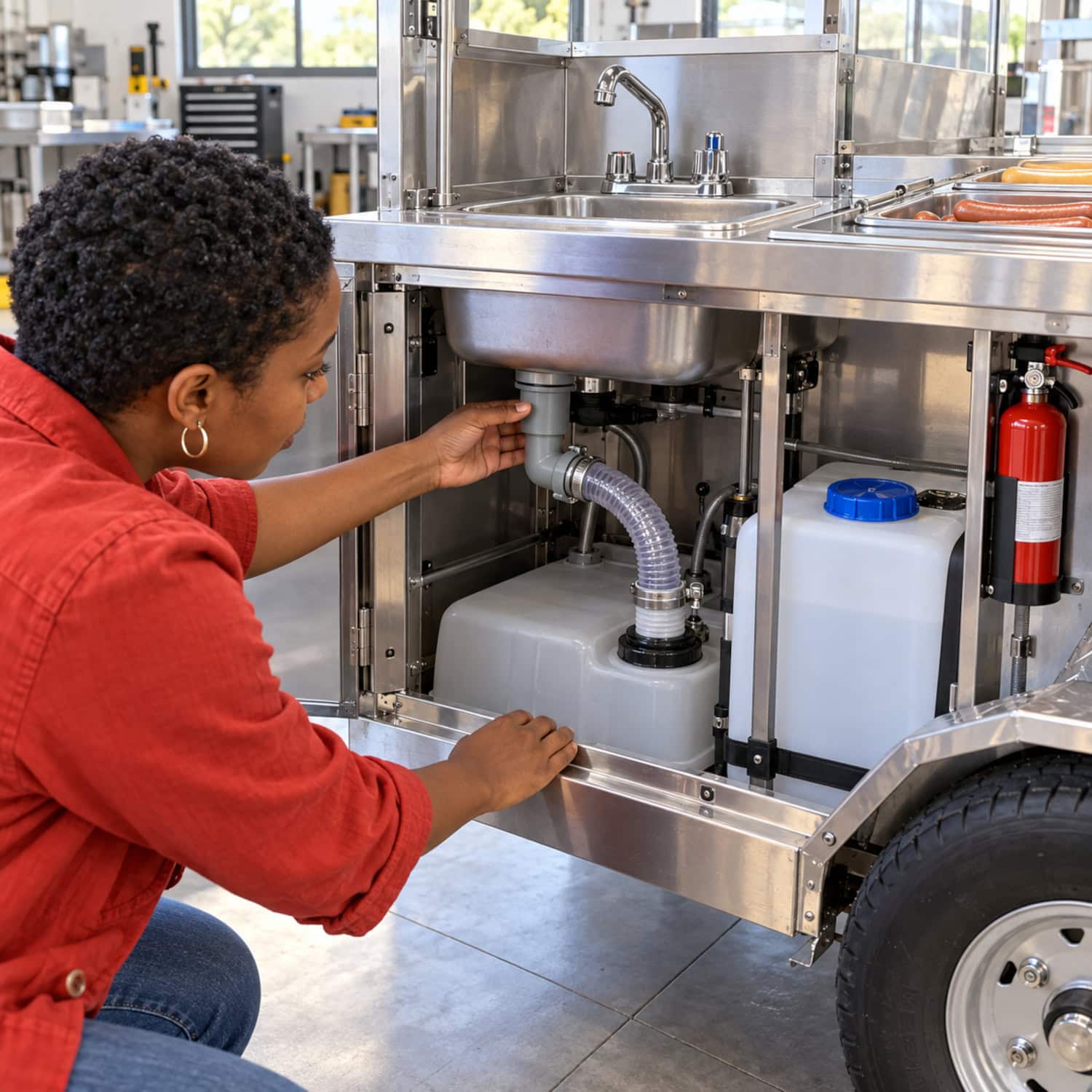
A basic setup may involve a grill or steam table, safe cold and hot holding, a handwashing sink, water and wastewater tanks, food storage, sanitation supplies, a fire extinguisher, a payment system, and serving utensils.
The exact approved configuration depends on the menu and authority.
Inspect a used cart in this order before paying:
- Request the model, dimensions, equipment specifications, ownership documentation, and any prior inspection records.
- Send the proposed specifications to the relevant health authority and ask what additional features or changes would be required.
- Examine sinks, water tanks, plumbing, drainage, and accessible cleaning surfaces for damage or leaks.
- Check cooking, refrigeration, and holding equipment for working condition and appropriate capacity.
- Have qualified personnel evaluate propane, electrical, and other fuel systems rather than attempting unsafe repairs yourself.
- Check wheels, frame, weight, towing or push requirements, loading arrangements, and storage fit.
- Obtain prices for missing parts, repairs, transport, and modifications before judging the deal.
- Confirm seller identity, payment terms, and whether any warranty or support actually transfers to you.
A cart that has been sitting unused may need more work than its clean exterior suggests.
Renting compliant equipment for an initial permitted event can limit purchase risk, but the rental terms must still cover breakdowns, delivery, and required approvals.
9. Set a menu that your cart can serve quickly
A first hot dog menu works best when each item uses ingredients the approved equipment can store and serve safely without slowing a line.
Every topping adds preparation, storage, service time, and potential waste.
Begin with a dependable basic dog and a small number of options that customers at the chosen site will recognize.
Premium toppings, larger dogs, drinks, and combos are worth testing only when their selling prices cover their added costs and preparation time.
Price the customer order, not just the sausage. Track food, buns, condiments, packaging, and card fees for each sale.
The $7 average order in Section 5 is only an illustration; real prices must be tested against the local audience and the product actually offered.
At a festival, a long line with complicated custom toppings can mean fewer orders completed during the busiest hour.
A short menu that workers can deliver consistently may earn more than an ambitious menu with a higher theoretical price per item.
10. Operating a hot dog business day to day
Hot dog vending includes more working hours than the time the stand is open.
Purchasing food, loading the cart, traveling, setting up, maintaining safe holding conditions, serving, cleaning, and disposing of waste all draw on the owner’s day.
Keep daily records of transaction count, average order, food waste, payment fees, site costs, and total hours from preparation through cleanup.
Compare ordinary weekday sites with events on contribution after travel and event fees, not headline sales alone.
Weather makes the workload harder to predict.
Rain, high wind, extreme temperatures, or a canceled event can wipe out the expected audience while certain expenses remain due.
Bring inventory that matches a cautious estimate and record what returns unsold.
For employees, track paid labor as a share of revenue and whether faster service genuinely pays for the extra person.
A part-time business works only if the entire service day, including the invisible hours, fits the owner’s schedule.
11. Buying an existing hot dog cart business
An existing hot dog operation can save setup work, but its value depends on verifiable earnings and permissions the buyer can retain.
A seller’s claimed busy location or weekly receipts cannot be treated as transferable profit.
Carry out due diligence before making a binding purchase commitment:
- Match sales claims against payment records, cash records, tax information, and actual operating days.
- Review food purchases, commissary bills, permits, insurance, rent, employee pay, and repairs to reconstruct operating profit.
- Inspect the cart using Section 8’s checklist and price any required modifications.
- Ask the health and licensing authorities whether a buyer must apply again for approvals.
- Obtain written confirmation that the property owner or event organizer will permit the buyer to operate.
- Check equipment ownership, outstanding financing, supplier balances, and any contractual obligations.
- Observe service at the stated location and confirm the claimed schedule and customer demand.
A cart with a recognized name but no assured selling location may be worth only its equipment and other transferable assets.
12. Turnkey offers and common beginner traps
A packaged hot dog vending opportunity may include equipment, training, or proposed locations, but the package has no special exemption from local approvals or commercial reality.
Judge each component separately before paying a premium.
| Myth | What actually happens |
|---|---|
| A cheap used cart makes this a cheap business | Modifications, facilities, permissions, and working cash may exceed the initial savings |
| A health permit allows vending anywhere | Street, park, private-property, and event permissions are separate |
| Busy foot traffic guarantees sales | Buyers must be able and willing to stop during service hours |
| High hot dog markup means high owner income | Commissary, rent, travel, waste, staffing, and slow days reduce the surplus |
| A turnkey package eliminates startup work | The buyer still has to verify local fit, claims, contracts, and approvals |
Be particularly cautious of promised earnings based on a single good event or a seller’s unverified daily totals.
The useful evidence is repeatable sales after the costs of delivering them.
13. Hot dog business launch plan
The first opening day should confirm a previously checked operating plan, not serve as the first test of whether a cart is legal or the site exists.
Follow the decisions below in order, allowing time for local review and any necessary corrections.
- Before spending: Define the menu and format, ask the health department for requirements, observe likely customers, and prepare a low-sales budget.
- Before registering and signing: Decide the ownership structure, identify tax and insurance needs, confirm the possible site and commissary, and compare written agreement terms.
- Before buying equipment: Verify that the proposed design meets the authority’s requirements and that the chosen site, transport, and facility arrangements remain workable.
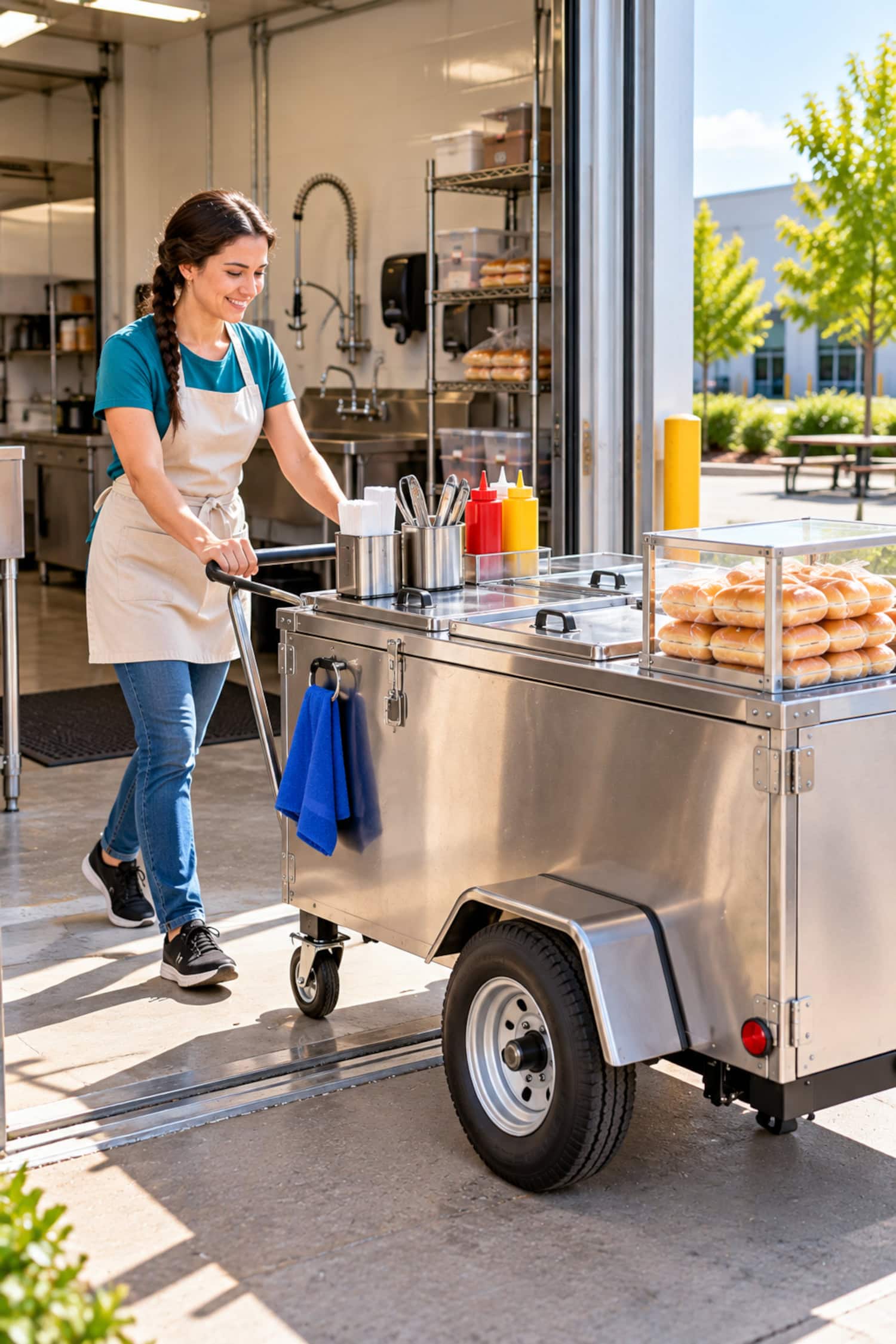
- Before opening: Complete required applications and inspections, arrange approved food storage and waste handling, test equipment, train anyone handling food, and confirm written site access.
- During the first 30 to 90 days: Record every outing’s sales, direct costs, overhead, waste, and total work hours, then compare the results with the conservative budget.
Do not use an opening date printed on promotional material as a substitute for the permits and operational checks required to serve customers safely.
14. When to move or close a hot dog stand
A weak hot dog location deserves a measured diagnosis before more spending.
Compare actual customer count, average order, site charges, and total hours across several representative service days, taking weather and unusual events into account.
A low transaction count with little relevant traffic suggests a demand or access problem.
Reasonable traffic with poor sales may point toward visibility, the offer, pricing, or competition.
Good sales with little money left point toward rent, ingredient cost, travel, waste, or excessive labor.
Change one major variable at a time where practical.
If the location remains unprofitable after realistic adjustments, check termination terms and permissions for an alternative site instead of treating the original spot as a permanent commitment.
15. Expanding a hot dog business
Additional carts or a larger trailer increase capacity only when existing service opportunities produce enough profitable demand to support them.
Another site also brings more setup, transport, food safety oversight, staffing, storage, and administrative work.
Expansion is easier to judge after the first operation has stable sales records, a repeatable menu, written access arrangements, and a clear view of owner hours.
Compare the earnings from a second cart with the expense and complexity of operating another location.
Upgrading to a truck solely to offer more menu items can turn a manageable operation into a much costlier one.
FAQ
How much does it cost to start a hot dog business?
Roughly $3,000 to $30,000 is a preliminary range for a small cart-based launch, with some setups costing more.
Your equipment, commissary, permits, location, and reserve determine the actual budget; see Section 5.
Do I need an LLC to sell hot dogs?
No, an LLC is not a universal requirement for operating a hot dog cart.
You still need the registrations and permissions that apply to your business; see Section 6.
Do I need a commissary for a hot dog cart?
It depends on the proposed menu, equipment, and local health rules.
Confirm the accepted facilities and agreement requirements before spending on a cart; see Section 7.
Can I run a hot dog stand only on weekends?
Yes, if permitted events or sites offer enough net income for the total work involved.
Include shopping, transport, setup, and cleanup in your available hours; see Section 10.
How many hot dogs must I sell to break even?
It depends on contribution per customer order and fixed costs.
In the illustration, about 445 monthly orders cover $2,000 of overhead before owner pay and taxes; see Section 5.
Is it better to buy a hot dog cart or a food truck?
A cart usually fits a smaller initial operation, while a truck may suit a broader menu or higher capacity.
Choose based on actual demand, transport, approvals, and total costs; see Section 2.
Conclusion
A workable hot dog business starts with a menu and selling location that can be approved before equipment is purchased.
Records from real service days then determine whether the operation deserves to continue or expand.
- Request written food-equipment criteria and exact vending-site permission requirements from the responsible offices.
- Budget for commissary access, travel, slow days, and the full hours needed to serve.
- Expand only after actual sales and net earnings justify more capacity.
Further reading
- Internal Revenue Service: Find federal employer identification and tax-filing information relevant to registering a hot dog vending operation.
- U.S. Small Business Administration: Find business-planning and financing guidance for estimating a cart’s launch budget and cash needs.
- Food Truck Empire hot dog startup costs: Explore a detailed cost breakdown for budgeting equipment and the other expenses around a hot dog cart.
- How to Get the Best Hot Dog Cart Locations: Examine practical approaches to finding places where a hot dog cart might be allowed to serve.
- Hot dog cart equipment buying discussion: Read buyer concerns about compliance, used equipment, and supplier reliability before purchasing.
- Looking for a commissary: See how securing an acceptable kitchen arrangement can become the remaining barrier to opening.
- Buying a used hot dog cart: Explore the inspection and earning-claim questions raised during a possible cart purchase.
- Food cart versus food truck: Compare the tradeoffs owners face when choosing small carts or larger mobile equipment.